

Pollinators for Texas Project

HEBs Our Texas Our Future
We are excited to announce our participation in the Pollinators for Texas initiative! Our chapter project was selected to receive financial support to enhance native pollinator conservation in our area! Our project, the Buzz and Bloom Sensory Garden, will provide critical pollinator habitat while serving as a hands-on learning space for children and community members. Located adjacent to Kingdom Roots Academy and the Jasper community garden, the garden will include immersive sensory features, interpretive signage, and conservation programming, making a lasting impact on pollinator conservation. A big thank you to H-E-B for their generous support in this initiative and collaboration with the Texas Master Naturalist Program. Together, we’re working to safeguard and enhance native pollinator populations across Texas! For more information about Pollinators for Texas visit the website at Pollinators for Texas or
#TexasMasterNaturalist #OurTexasOurFuture.
Location 1: Harvest Church of Southeast Texas
Location 2: To Be Announced
Jasper County Native Plants
& The Pollinators They Support
The following are native plants found in deep Southeast Texas along with the various pollinating animals they support. These plants are well suited for our environment and climate.
Click here to download in PDF format –> Pollinator Plant List
Wildflowers
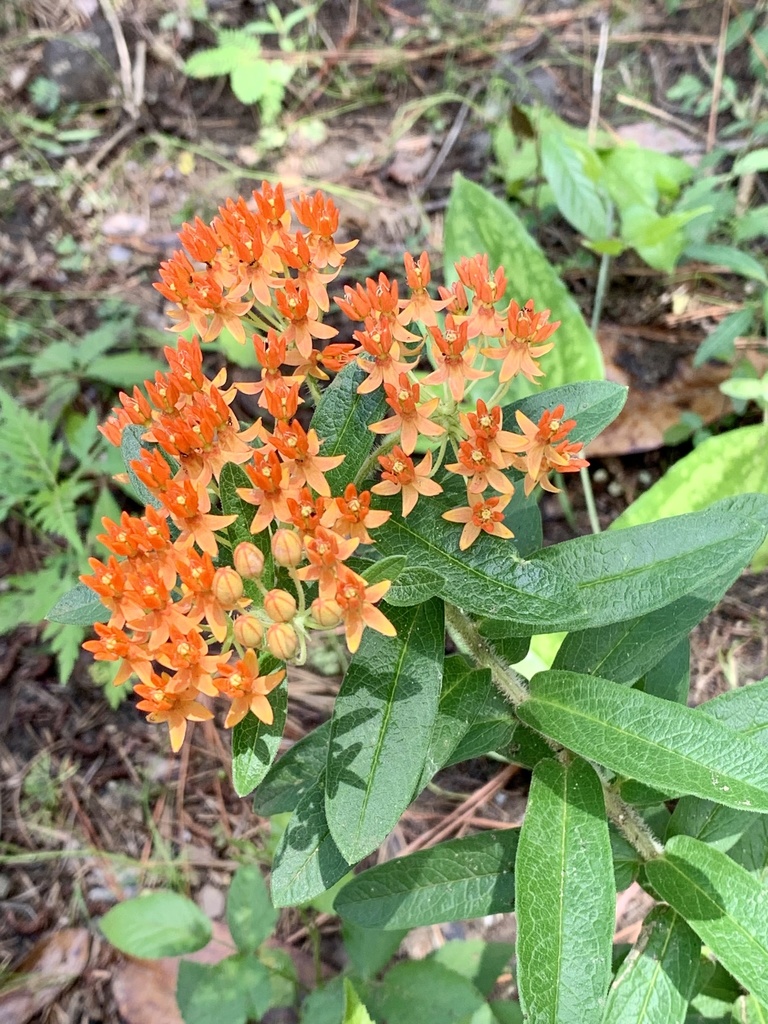
Butterfly Milkweed, Asclepias tuberosa
Monarch Butterfly, Danaus plexippus: host and nectar
Queen Butterfly, host and nectar
Gray Hairstreak Butterfly, host and nectar
Pipevine Swallowtail, nectar
Zebra Swallowtail, nectar
Palamedes Swallowtail, nectar
Eastern Tiger Swallowtail, nectar
Black Swallowtail, nectar
Spicebush Swallowtail, nectar
Eastern Giant Swallowtail, nectar
Painted Lady Butterfly, nectar
Native Solitary Bees, nectar and pollen
American Bumblebee, nectar and pollen
Dark Flower Scarab, pollen and nectar
Bloom Time: May-September
Bloom Color: Orange
Duration: Perennial
Water Use: Low
Light Requirement: Sun
Soil Moisture: Dry, Moist
Drought Tolerance: High
Soil Description: Prefers well-drained sandy soils. Tolerates drought.
Availability: Monarch Watch has flats of 32 plugs for $181 shipped only in April but
preorder.
Redring Milkweed, Asclepias variegata
Monarch Butterfly, Danaus plexippus: host and nectar
Silvery Checkerspot, host and nectar
Gorgone Checkerspot, host and nectar
Monarch Butterfly, Danaus plexippus: nectar
Painted Lady, nectar
American Lady, nectar
Pipevine Swallowtail, nectar
Zebra Swallowtail, nectar
Palamedes Swallowtail, nectar
Eastern Tiger Swallowtail, nectar
Black Swallowtail, nectar
Spicebush Swallowtail, nectar
Eastern Giant Swallowtail, nectar
American Bumblebee, nectar and pollen
Native Solitary Bees, nectar and pollen
Dark Flower Scarab, pollen and nectar
Bloom Time: May-July
Bloom Color: White with Red Rings
Duration: Perennial
Water Use: Low
Light Requirement: Sun, Part Shade
Soil Moisture: Dry
Soil Description: Sandy to rocky.
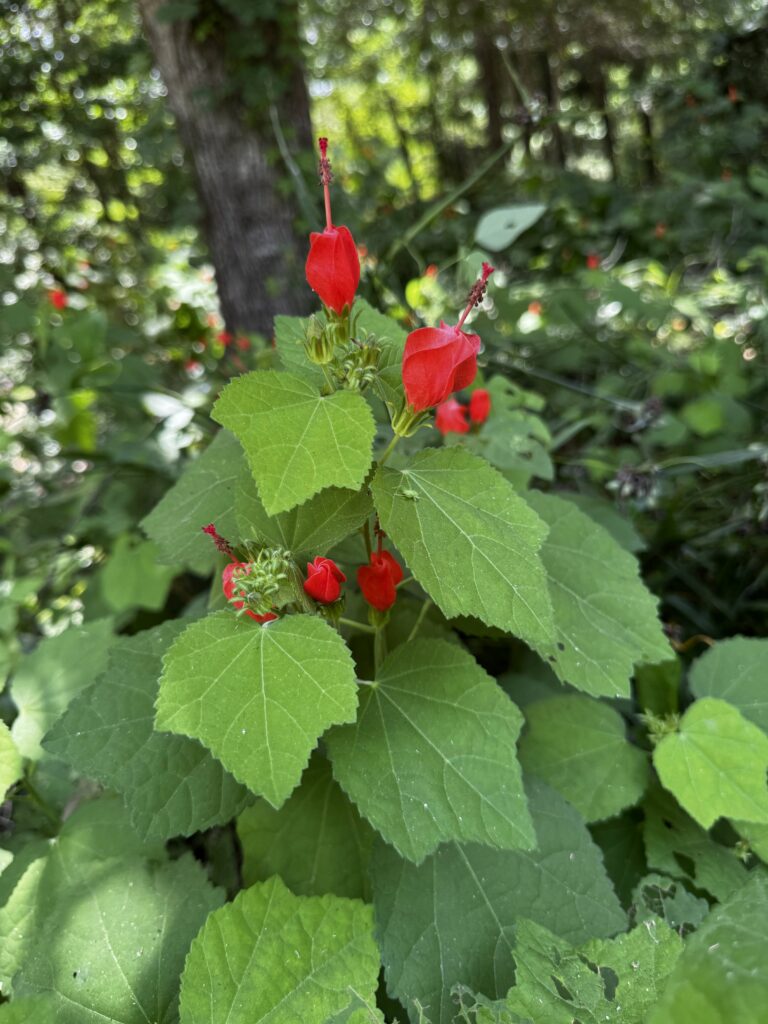
Turk’s Cap, Malvaviscus arboreus
Turk’s-cap White-Skipper, host and nectar
Hummingbirds, Nectar
Bloom Time: May-November
Bloom Color: Red
Duration: Perennial
Water Use: Medium
Light Requirement: Part Shade, Shade
Soil Moisture: Dry to Moist
Soil Description: Sandy, loamy, clay, and limestone soils. Moist, well-drained, woodland
soils best.
Conditions Comments: Drought tolerant. Prefers partially shady sites. Under
cultivation, Turk’s Cap will adapt to and thrive in many different sites, including full sun
and heavy soil, though unremitting sun will cause its leaves to become rougher, smaller,
darker, and puckered.
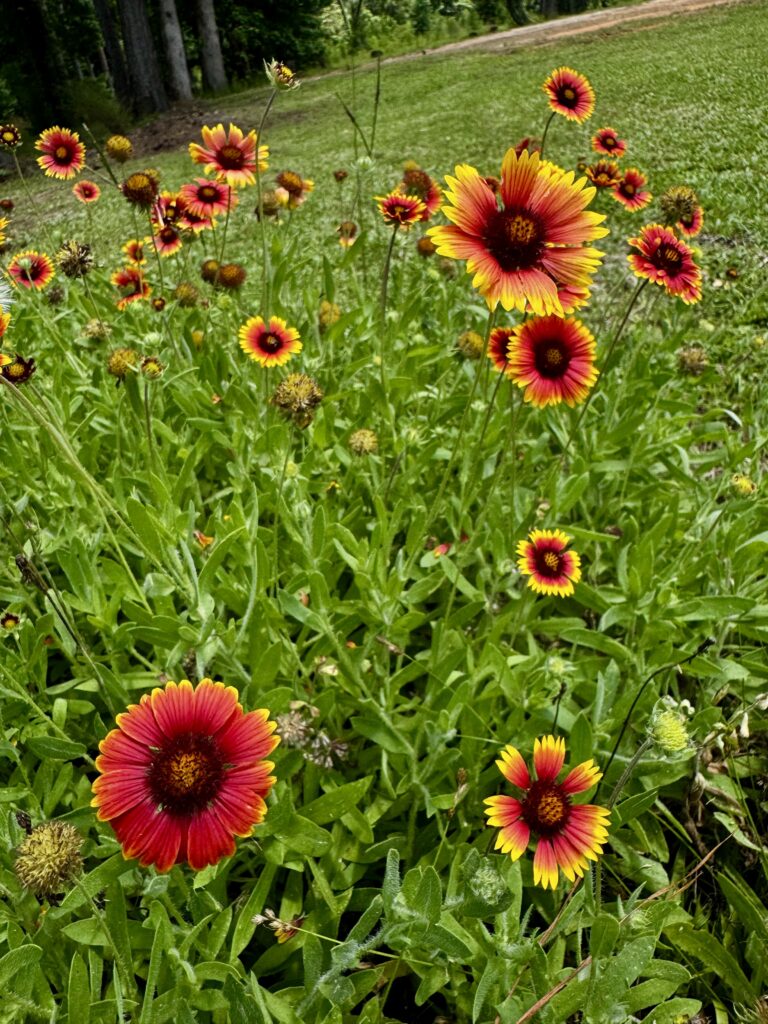
Indian Blanket, Gaillardia pulchella
Monarch Butterfly, Danaus plexippus: nectar
Duskywings, nectar
Little Yellow, nectar
Fiery Skipper, nectar
Pearl Crescent, nectar
American Bumblebee, nectar and pollen
Native Solitary Bees, nectar and pollen
Bloom Time: May-August
Bloom Color: Red and Yellow
Duration: Annual
Water Use: Medium
Light Requirement: Sun , Part Shade
Soil Moisture: Dry
Soil pH: Circumneutral (pH 6.8-7.2)
Soil Description: Sandy or calcareous soils, often disturbed places, mostly in
grasslands or open places.
Conditions Comments: Indian blanket is a major wildflower of the prairies and
meadows. It reseeds readily and is easy to grow; good drainage is the only
requirement. Rich soils will produce large, floppy plants with few flowers. Indian blanket
is very easy to grow and is commonly used in roadside & meadow plantings.
Cucumberleaf Sunflower, Helianthus debilis
Silvery Checkerspot, host and nectar
Gorgone Checkerspot, host and nectar
Rustic Sphinx Moth, host and nectar
Monarch Butterfly, Danaus plexippus: nectar
Painted Lady, nectar
American Lady, nectar
Pipevine Swallowtail, nectar
Zebra Swallowtail, nectar
Palamedes Swallowtail, nectar
Eastern Tiger Swallowtail, nectar
Black Swallowtail, nectar
Spicebush Swallowtail, nectar
Eastern Giant Swallowtail, nectar
Native Solitary Bees, nectar and pollen
Bloom Time: April-November
Bloom Color: Yellow
Duration: Annual
Water Use: Medium
Light Requirement: Sun
Soil Description: Sandy soils.
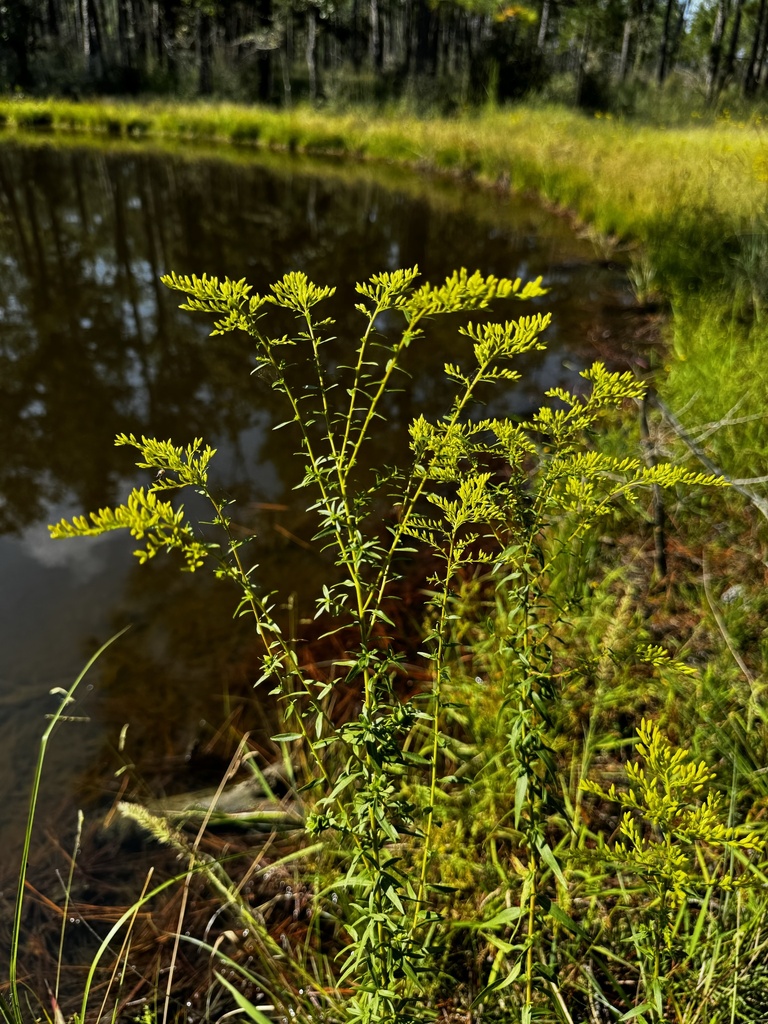
Sweet Goldenrod, Solidago odora
Silvery Checkerspot, nectar
Gorgone Checkerspot, nectar
American Bumblebee, nectar and pollen
Native Solitary Bees, nectar and pollen
Bloom Time: July-October
Bloom Color: Yellow
Duration: Perennial
Light Requirement: Sun
Soil Moisture: Moist
Soil pH: Acidic (pH<6.8)
Soil Description: Average to poor, sandy soils.
Recommended: One of the last blooms of the season for bees
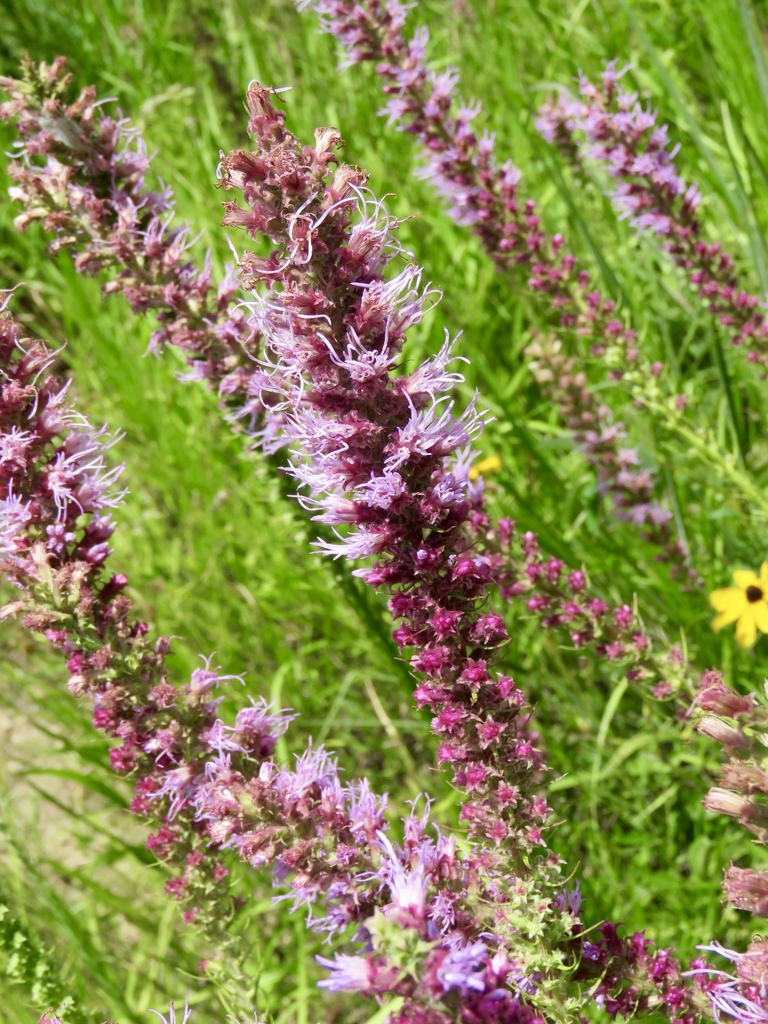
Prairie Blazing Star, Liatris pycnostachya
Sharp Blazing Star, Liatris acidota
Bleeding Flower Moth, Schinia sanguinea, host and nectar
Monarch Butterfly, Danaus plexippus: nectar
Eastern Tiger Swallowtail, nectar
Eastern Giant Swallowtail, nectar
Pipevine Swallowtail, nectar
Spicebush Swallowtail, nectar
Palamedes Swallowtail, nectar
Long-tailed Skipper, nectar
Dorantes Longtail, nectar
Cloudless Sulphur, nectar
American Bumblebee, nectar and pollen
Native Solitary Bees, nectar and pollen
Bloom Time: July-September
Bloom Color: Purple
Duration: Perennial
Water Use: Medium
Light Requirement: Sun
Soil Moisture: Dry , Moist
Soil pH: Acidic (pH<6.8)
CaCO3 Tolerance: Low
Drought Tolerance: High
Heat Tolerant: yes
Soil Description: Moist, well-drained soils. Rocky, Sandy, Sandy Loam, preferably of
poor quality.
Wild Bergamont, Monarda fistulosa
Morning Glory Plum Moth, host and nectar
Monarch Butterfly, Danaus plexippus: nectar
Sphinx Moths, nectar
American Bumblebee, nectar and pollen
Sweat Bees, Pollen and nectar
Native Solitary Bees, nectar and pollen
Feather-Legged Scoliid Wasps, nectar
Blue-Winged Scoliid Wasps, nectar
Bloom Time: April-June
Bloom Color: Purple
Duration: Perennial
Water Use: Medium
Light Requirement: Sun , Part Shade
Soil Moisture: Dry , Moist
Soil pH: Alkaline (pH>7.2) , Acidic (pH<6.8) , Circumneutral (pH 6.8-7.2)
Soil Description: Thrives in a wide range of soils, from acid to lime to rich to poor to
sand to clay. Less tolerant of flooding, but can take it in the winter.

Black-eyed Susan, Rudbeckia hirta
Silvery Checkerspot, host and nectar
Gorgone Checkerspot, host and nectar
Wavy-lined Emerald Moth, host and nectar
Monarch Butterfly, Danaus plexippus: nectar
American Lady, nectar
Painted Lady, nectar
Native Solitary Bees, nectar and pollen
Bloom Time: June-October
Bloom Color: Yellow
Duration: Annual, Perennial, Biennial
Water Use: Medium
Light Requirement: Sun
Soil Moisture: Dry, Moist
Soil pH: Acidic (pH<6.8)
Soil Description: Moist to dry, well-drained soils.
Conditions Comments: May bloom longer with some afternoon shade. Black-eyed
Susan can become aggressive if given too perfect an environment and not enough
competition.
Calico Aster, Symphyotrichum lateriflorum
Pearl Crescent, host and nectar
Silvery Checkerspot, host and nectar
Isabella Tiger moth, host and nectar
Monarch, nectar
American Bumblebee, nectar and pollen
Miner Bees, nectar and pollen
Sweat Bees, nectar and pollen
Feather-Legged Scoliid Wasps, nectar
Blue-Winged Scoliid Wasps, nectar
Bloom Time: August-October
Bloom Color: White, Purple
Duration: Perennial
Light Requirement: Sun
Purple Coneflower, Echinacea purpurea
Wavy-lined Emerald Moth, host and nectar
Silvery Checkerspot Butterfly, host and nectar
Hummingbirds, Nectar
Monarch, nectar
Painted Lady, nectar
Eastern Tiger Swallowtail, nectar
Gulf Fritillary, nectar
Variegated Fritillary, nectar
American Lady, nectar
Native Solitary Bees, nectar and pollen
Bloom time: April-September
Bloom Color: Pink to Purple
Duration: Perennial
Light Requirement: Sun to partial shade
Soil Moisture: Well-drained sandy or richer

Coral Bean, Erythrina herbacea
Hummingbirds, nectar
American Bumblebee, nectar and pollen
Bloom Time: March-November
Bloom Color: Red
Duration: Perennial
Water Use: Medium
Light Requirement: Sun, Part Shade
Soil Moisture: Dry
Soil Description: Sandy soils. Sandy, Sandy Loam, Medium Loam, Clay Loam, Clay,
Acid-based, Calcareous
Conditions Comments: Trim dead stem tips after new growth emerges in spring when
frost damage becomes evident. Be careful of spines on the stems. The top often
freezes back in winter but return with vigor in the spring from underground, tuberous
root stumps. The seed pods split open to reveal bright red seeds, providing visual
interest long after flowering. The seeds are highly toxic if ingested.
Finger False Dragonhead, Physostegia digitalis
Hummingbirds, nectar
Monarch, nectar
Painted Lady, nectar
Spicebush Swallowtail, nectar
Pipevine Swallowtail, nectar
Black Swallowtail, nectar
Eastern Tiger Swallowtail, nectar
Palamedes Swallowtail, nectar
Zebra Swallowtail, nectar
Eastern Giant Swallowtail, nectar
Long-tailed Skipper, nectar
Fiery Skipper, nectar
Silver-spotted Skipper, nectar
Tropical Checkered Skipper, nectar
Horace’s Duskywings,nectar
Gulf Fritillary, nectar
Variegated Fritillary, nectar
American Bumblebee, nectar and pollen
Native Solitary Bees, nectar and pollen
Duration: Perennial
Bloom Time: May-August
Bloom Color: Pink, Purple
Light Requirement: Full Sun to Part Shade
Soil Description: Sandy, moist soils.
Eastern Bluestar, Amsonia tabernaemontana
Hummingbirds, nectar
Snowberry Clearwing, Host and nectar
Tersa Sphinx, nectar
Walnut Sphinx, nectar
Virginia Creeper Sphinx, nectar
Pawpaw Sphinx, nectar
Blinded Sphinx, nectar
Banded Sphinx, nectar
Pandorus Sphinx, nectar
Rustic Sphinx, nectar
Carolina Sphinx, nectar
Carpenter Bees, pollen and nectar
Duration: Perennial
Bloom Time: March-May
Bloom Color: Blue, Purple
Light Requirement: Part Shade
Soil Moisture: Wet
Soil Description: Wet to moist, sandy soils.
Conditions Comments: This species should be cut back after flowering.
Green Antelopehorns Milkweed, Asclepias viridis
Monarch Butterfly, Danaus plexippus: host and nectar
Dark Flower Scarab, pollen and nectar
Silvery Checkerspot, host and nectar
Gorgone Checkerspot, host and nectar
Monarch Butterfly, Danaus plexippus: nectar
Painted Lady, nectar
American Lady, nectar
Pipevine Swallowtail, nectar
Zebra Swallowtail, nectar
Palamedes Swallowtail, nectar
Eastern Tiger Swallowtail, nectar
Black Swallowtail, nectar
Spicebush Swallowtail, nectar
Eastern Giant Swallowtail, nectar
American Bumblebee, nectar and pollen
Native Solitary Bees, nectar and pollen
Bloom Time: April-September
Bloom Color: White
Duration: Perennial
Water Use: Low
Light Requirement: Sun

Clasping milkweed, Asclepias amplexicaulis
Monarch Butterfly, Danaus plexippus: host and nectar
Silvery Checkerspot, host and nectar
Gorgone Checkerspot, host and nectar
Monarch Butterfly, Danaus plexippus: nectar
Painted Lady, nectar
American Lady, nectar
Pipevine Swallowtail, nectar
Zebra Swallowtail, nectar
Palamedes Swallowtail, nectar
Eastern Tiger Swallowtail, nectar
Black Swallowtail, nectar
Spicebush Swallowtail, nectar
Eastern Giant Swallowtail, nectar
American Bumblebee, nectar and pollen
Native Solitary Bees, nectar and pollen
Dark Flower Scarab, nectar and pollen
Bloom Time: May-August
Bloom Color: Pinkish Tan to Greenish Purple
Duration: Perennial
Water Use: Low
Light Requirement: Sun, Part Shade
Soil Moisture: Dry
Soil Description: Sandy to rocky.
Musky Mint, Hyptis alata
Monarch Butterfly, Danaus plexippus: nectar
American Bumblebee, nectar and pollen
Bloom Time: May-November
Bloom Color: White
Duration: Perennial
Water Use: Medium , High
Light Requirement: Sun , Part Shade
Soil Moisture: Moist , Wet
Soil pH: Acidic (pH<6.8) , Circumneutral (pH 6.8-7.2)
Cold Tolerant: yes
Heat Tolerant: yes
Conditions Comments: This shrub mint usually grows in acidic, sandy soils
Narrowleaf Sunflower, Helianthus angustifolius
Silvery Checkerspot, host and nectar
Gorgone Checkerspot, host and nectar
Monarch Butterfly, Danaus plexippus: nectar
Painted Lady, nectar
American Lady, nectar
Pipevine Swallowtail, nectar
Zebra Swallowtail, nectar
Palamedes Swallowtail, nectar
Eastern Tiger Swallowtail, nectar
Black Swallowtail, nectar
Spicebush Swallowtail, nectar
Eastern Giant Swallowtail, nectar
Native Solitary Bees, nectar and pollen
Bloom Time: July-October
Bloom Color: Yellow
Duration: Perennial
Water Use: Medium
Light Requirement: Part Shade
Soil Moisture: Wet
CaCO3 Tolerance: Medium
Soil Description: Sandy, Sandy Loam, Medium Loam, Clay Loam, Clay, Acid-based
Stiff-hair Sunflower, Helianthus hirsutus
Silvery Checkerspot, host and nectar
Gorgone Checkerspot, host and nectar
Rustic Sphinx Moth, host and nectar
Monarch Butterfly, Danaus plexippus: nectar
Painted Lady, nectar
American Lady, nectar
Pipevine Swallowtail, nectar
Zebra Swallowtail, nectar
Palamedes Swallowtail, nectar
Eastern Tiger Swallowtail, nectar
Black Swallowtail, nectar
Spicebush Swallowtail, nectar
Eastern Giant Swallowtail, nectar
Native Solitary Bees, nectar and pollen
Bloom Time: August-November
Bloom Color: Yellow
Duration: Perennial
Water Use: Medium
Light Requirement: Sun
Soil Description: Loam
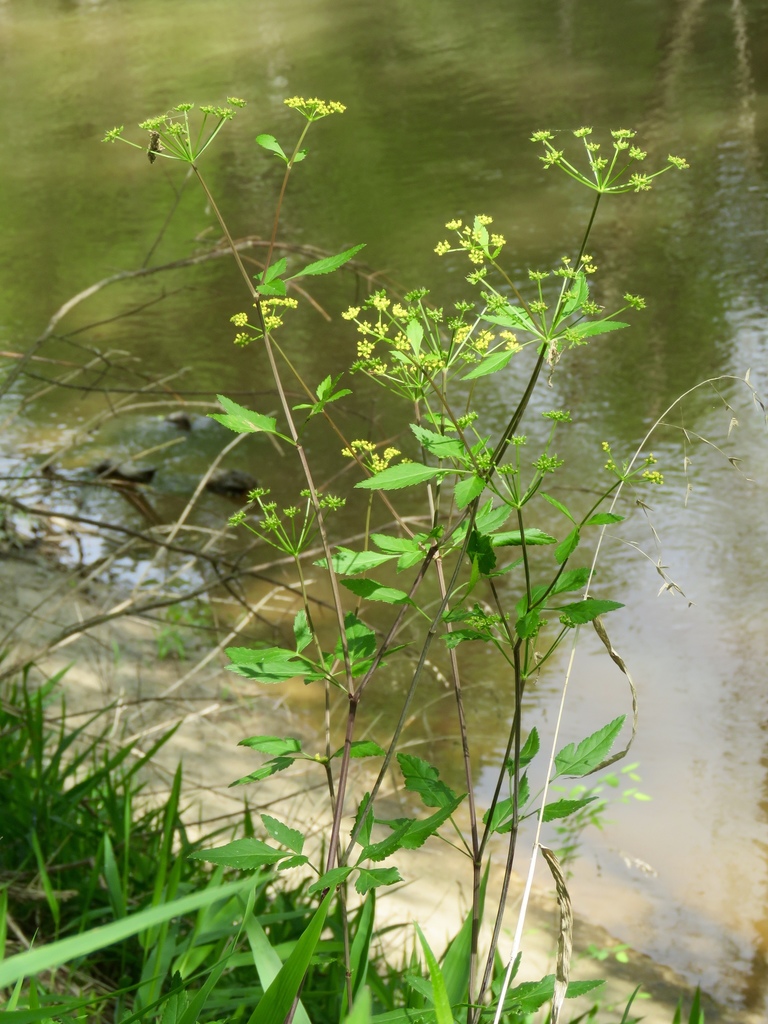
Golden Alexanders, Zizia aurea
Black Swallowtail, host and nectar
Native Solidary Bees, nectar and pollen
Native beetles, nectar and pollen
Bloom Time: April-August
Bloom Color: Yellow
Duration: Perennial
Light Requirement: Sun , Part Shade
Soil Moisture: Moist
Soil Description: Moist, sandy or sandy-clay soils.
Downy Lobelia, Lobelia puberula
Reverchon’s Lobelia, Lobelia reverchonii
Pipevine Swallowtail, nectar
Long-tailed Skipper, nectar
Gulf Fritillary, nectar
Cloudless Sulphur, nectar
Bloom Time: August-November
Bloom Color: Blue
Duration: Perennial
Light Requirement: Sun to part shade
Soil Moisture: Moist
Soil Description: Well drained sandy or loamy, enjoys damp conditons
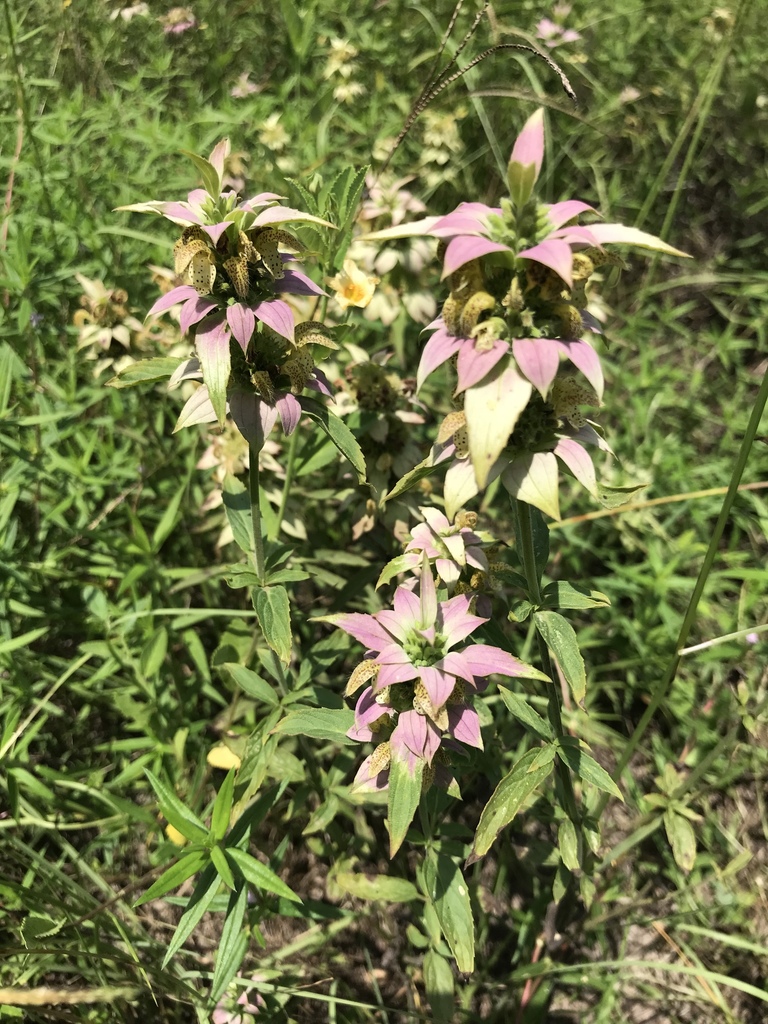
Spotted Horsemint, Monarda punctata
Morning Glory Plum Moth, host and nectar
Monarch Butterfly, Danaus plexippus: nectar
Sphinx Moths, nectar
American Bumblebee, nectar
Sweat Bees, Pollen and nectar
Native Solitary Bees, nectar and pollen
Feather-Legged Scoliid Wasps, nectar
Blue-Winged Scoliid Wasps, nectar
Bloom Time: April-August
Bloom Color: White, Pink, Yellow, Green, Purple
Duration: Perennial
Water Use: Low
Light Requirement: Sun
Soil Moisture: Dry
Soil pH: Circumneutral (pH 6.8-7.2)
Soil Description: Dry, sandy soils
Conditions Comments: Spotted Horsemint can become aggressive. It is noticeably
fragrant.
Sanguine Purple Coneflower, Echinacea sanguinea
Wavy-lined Emerald Moth, host and nectar
Silvery Checkerspot Butterfly, host and nectar
Monarch, nectar
Painted Lady, nectar
Eastern Tiger Swallowtail, nectar
Gulf Fritillary, nectar
Variegated Fritillary, nectar
American Lady, nectar
Native Solitary Bees, nectar and pollen
Bloom time: April-June
Bloom Color: Pink
Duration: Perennial
Light Requirement: Sun to partial shade
Soil Moisture: Moist well-drained acidic, sandy
Woodland Poppymallow, Callirhoe papaver
Winecup Mallow, Callirhoe involucrata
Painted Lady, host and nectar
Gray Hairstreak Butterfly, host and nectar
Checkered Skipper, host and nectar
Pipevine Swallowtail, nectar
Native Solitary Bees, nectar and pollen
Duration: Perennial
Bloom Time: March-June
Bloom Color: Pink, Purple
Water Use: Medium
Light Requirement: Sun , Part Shade
Soil Moisture: Dry , Moist
Soil Description: Well-drained, rocky or sandy soils. Clay, Clay Loam, Medium Loam,
Sandy Loam, Sandy, Gravelly, Calcareous, Acid-based.
Blue Mistflower, Conoclinium coelestinum
Clymene Moth, host and nectar
Three-lined Flower Moth, host and nectar
Monarch, nectar
Spicebush Swallowtail, nectar
Pipevine Swallowtail, nectar
Black Swallowtail, nectar
Eastern Tiger Swallowtail, nectar
Palamedes Swallowtail, nectar
Zebra Swallowtail, nectar
Long-tailed Skipper, nectar
Phaon Crescent, nectar
Gulf Fritillary, nectar
Native Solitary Bees, nectar and pollen
Duration: Perennial
Bloom Time: July-November
Bloom Color: Blue, Purple
Water Use: Medium
Light Requirement: Sun, Part Shade
Soil Moisture: Moist
Soil Description: Moist loam, sand, or clay.
Yarrow, Achillea millefolium
Painted Lady, host and nectar
Solitary Native Bees, nectar and pollen
Duration: Perennial (evergreen foliage in our area)
Bloom Time: April-June
Bloom Color: White
Water Use: Medium
Light Requirement: Sun , Part Shade
Soil Moisture: Dry
CaCO3 Tolerance: Medium
Drought Tolerance: High
Shrubs
Swamp Rose Mallow, Hibiscus moscheutos
Hummingbirds, nectar
Gray Hairstreak Butterfly, host and nectar
Painted Lady Butterfly, host and nectar
Common Checkered Skipper, host and nectar
Tropical Checkered Skipper, host and nectar
Io Moth, host and nectar
Eastern Tiger Swallowtail, nectar
American Bumblebee, nectar and pollen
Native Solitary Bees, nectar and pollen
Native Beetles, nectar and pollen
Duration: Perennial
Bloom Time: June-August
Bloom Color: Solid pink or white with dark pink center
Water Use: High
Light Requirement: Sun , Part Shade
Soil Moisture: Moist , Wet
Soil pH: Acidic (pH<6.8)
Drought Tolerance: Low
Aquatic: yes
Soil Description: Moist to wet, slightly acidic soils.
Conditions Comments: Clumps of this hibiscus start to grow late in the season and
flower over a long period in late summer.
Wild Azalea, Rhododendron canescens
Io Moth, host and nectar
Monarch Butterfly, Danaus plexippus: nectar
Pipevine Swallowtail, nectar
Zebra Swallowtail, nectar
Palamedes Swallowtail, nectar
Eastern Tiger Swallowtail, nectar
Black Swallowtail, nectar
Spicebush Swallowtail, nectar
Eastern Giant Swallowtail, nectar
Native Solitary Bees, nectar and pollen
Duration: Perennial
Bloom Time: March-May
Bloom Color: Pink
Water Use: Medium
Light Requirement: Part Shade
Soil Moisture: Moist but well drained.
Soil pH: Acidic (pH<6.8)
Soil Description: Acid-based, Sandy, Sandy Loam, Medium Loam
Conditions Comments: This is the most common native azalea in the Southeast. In
optimum conditions, can form large colonies.
Pineland Hibiscus, Hibiscus aculeatus
Gray Hairstreak Butterfly, host and nectar
Painted Lady Butterfly, host and nectar
Common Checkered Skipper, host and nectar
Tropical Checkered Skipper, host and nectar
Pearly Wood-Nymph Moth, host and nectar
Io Moth, host and nectar
Eastern Tiger Swallowtail, nectar
American Bumblebee, nectar and pollen
Native Solitary Bees, nectar and pollen
Native Beetles, nectar and pollen
Duration: Perennial
Bloom Time: June-November
Bloom Color: Creamy yellowish white with deep, dark red center
Water Use: Medium
Light Requirement: Sun , Part Shade
Soil Moisture: Moist
Soil pH: Acidic (pH<6.8)
Cold Tolerant: yes
Heat Tolerant: yes
Soil Description: Sandy, Acid-based
Conditions Comments: Tolerates winter flooding
Button Bush, Cephalanthus occidentalis
Monarch Butterfly, Danaus plexippus: nectar
Pipevine Swallowtail, nectar
Zebra Swallowtail, nectar
Palamedes Swallowtail, nectar
Eastern Tiger Swallowtail, nectar
Black Swallowtail, nectar
Spicebush Swallowtail, nectar
Eastern Giant Swallowtail, nectar
Gulf Fritillary, nectar
American Bumblebee, nectar and pollen
Duration: Perennial
Bloom Time: June-September
Bloom Color: White
Water Use: High
Light Requirement: Part Shade , Shade
Soil Moisture: Moist, Wet
Soil pH: Circumneutral (pH 6.8-7.2)
Cold Tolerant: yes
Soil Description: Limestone-based, Sandy, Sandy Loam, Medium Loam, Clay Loam,
Clay
Conditions Comments: Common buttonbush is a spreading, multi-branched shrub or
sometimes small tree with many branches (often crooked and leaning), irregular crown,
balls of white flowers resembling pincushions, and buttonlike balls of fruit. Buttonbush
is a handsome ornamental suited to wet soils and is also a honey plant. Ducks and
other water birds and shorebirds consume the seeds.
Hollow Joe-Pye Weed, Eutrochium fistulosum
Duration: Perennial
Bloom Time: July-September
Bloom Color: Pink, Purple
Water Use: Medium to High
Light Requirement: Sun to Part Shade
Soil Moisture: Moist
Soil pH: Acidic (pH<6.8)
Soil Description: Moist to wet soils.
Recommended: A Top Nectar Plant for Butterflies
Trees
Spicebush, Lindera benzoin
Spicebush Swallowtail, host and nectar
Palamedes Swallowtail, host and nectar
Native Solitary Bees, nectar and pollen
Native Beetles, nectar and pollen
Duration: Perennial
Bloom Time: April
Bloom Color: White to yellow
Water Use: Medium
Light Requirement: Sun, Part Shade , Shade
Soil Moisture: Moist, Wet
Soil Description: Moist, sandy, well-drained soils. Caliche type, Limestone-based,
Sandy Loam, Medium Loam
Conditions Comments: Spicebush is a fast-growing small tree up to 15 ft., useful in
moist, shady places. A small amount of sun yields a bush with better form and more
berries. There are no serious disease or insect problems.
Carolina Buckthorn, Frangula caroliniana
Painted Lady, host and nectar
Gray Hairstreak, host and nectar
Spring Azure, host and nectar
American Snout, host and nectar
Native Solitary Bees, nectar and pollen
Duration: Perennial, but usually holds its leaves during winter in this area
Bloom Time: April-June
Bloom Color: White, Yellow, Green
Light Requirement: Part Shade
Soil Moisture: Moist
Soil Description: Moist, calcareous, rocky soils.
Conditions Comments: Carolina buckthorn is an understory plant that produces shiny
leaves. It stands attractively alone or it works as a specimen. Flowers are tiny but
attract many pollinators. Many bird species feed on the bright red fruit. By fall, the fruits
turn black. In light shade, Carolina buckthorn is airy and tiered, somewhat like the
flowering dogwoods. Three to four hours per day of sun are necessary. With more sun,
the plant tends to get dense and shrubby losing some of its charm. Seedlings are
produced in profusion.
White Fringe Tree, Chionanthus virginicus
Rustic Sphinx Moth, host and nectar
Laurel Sphinx Moth, host and nectar
Duration: Perennial
Bloom Time: April-June
Bloom Color: Creamy white
Water Use: High
Light Requirement: Part Shade
Soil Moisture: Moist
CaCO3 Tolerance: None
Soil Description: Loose, moist, sandy soils.
Red Buckeye, Aesculus pavia
Hummingbirds, nectar
Imperial Moth, host and nectar
Polyphemus moth, host and nectar
Eastern Tiger Swallowtail, nectar
Long-horned beetles, nectar and pollen
Duration: Perennial
Bloom Time: March-May
Bloom Color: Red
Water Use: Medium
Light Requirement: Part Shade
Soil Moisture: Moist
Soil pH: Acidic (pH<6.8) , Circumneutral (pH 6.8-7.2)
Drought Tolerance: Medium
Soil Description: Deep, well-drained sand, loam, clay.
Conditions Comments: Do not over-water. Too much water can lead to leaf spot
diseases. Does best if protected from afternoon sun.
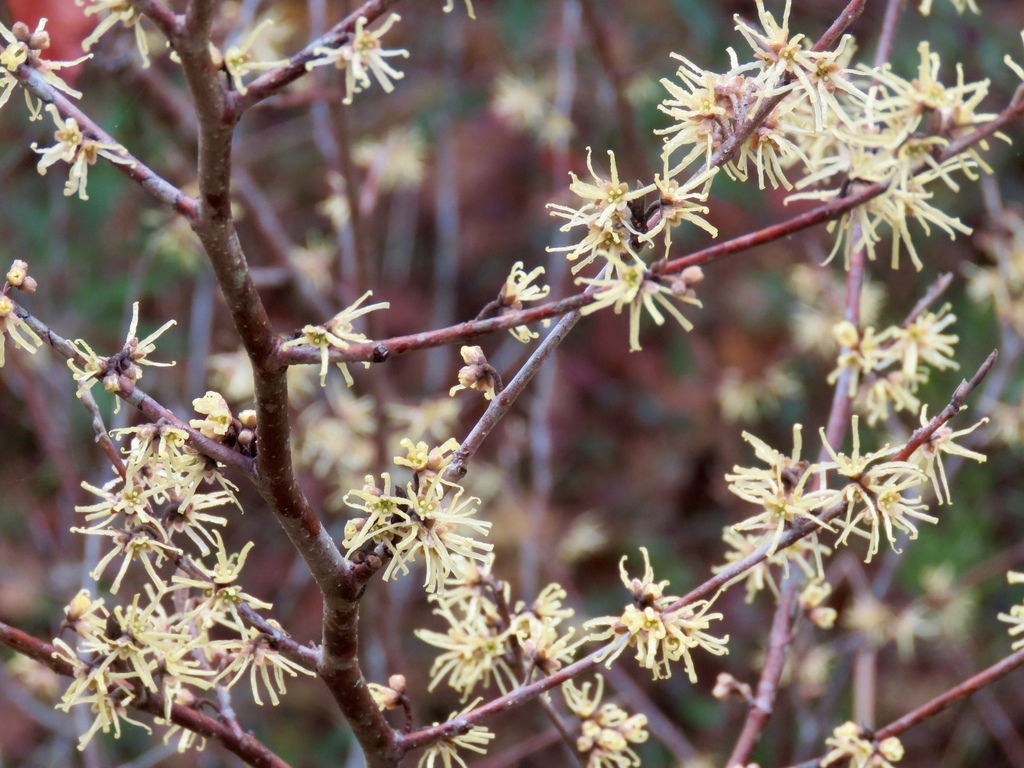
Common Witch-hazel, Hamamelis virginiana
Spring Azure, host and nectar
Polyphemus moth, host and nectar
Mustard Sallow Moth, host and nectar
Figure-Seven Moth, host and nectar
Dagger Moths (20 species), host and nectar
Large-lace Border Moth, host and nectar
Definite Tussock Moth, host and nectar
Owlet Moths, nectar
Duration: Perennial
Bloom Time: September – December
Bloom Color: Orange, Yellow
Water Use: Medium
Light Requirement: Part Shade, Shade
Soil Moisture: Moist
Soil pH: Acidic (pH<6.8)
Soil Description: Rich, well-drained soil. Sandy, Sandy Loam, Medium Loam, Clay
Loam, Clay, Acid-based, Calcareous
Conditions Comments: The long-lived witch hazel performs best on moister sites. It
tolerates wet soils, pollution, shade, and poor soil. Avoid extremely dry situations. Full
sun forms fuller, more symmetrical plants.
Recommended: Winter Blooms
Flowering Dogwood, Cornus florida
Roughleaf Dogwood, Cornus drummondii
Io Moth, host and nectar
Spring Azure, host and nectar
Solitary Native Bees, nectar and pollen
Duration: Perennial
Bloom Time: March-April
Bloom Color: White
Water Use: Low
Light Requirement: Part Shade , Shade
Soil Moisture: Moist
Soil pH: Acidic (pH<6.8)
Cold Tolerant: yes
Soil Description: Rich, well-drained, acid soil. Sandy, Sandy Loam, Medium Loam,
Acid-based
Vines
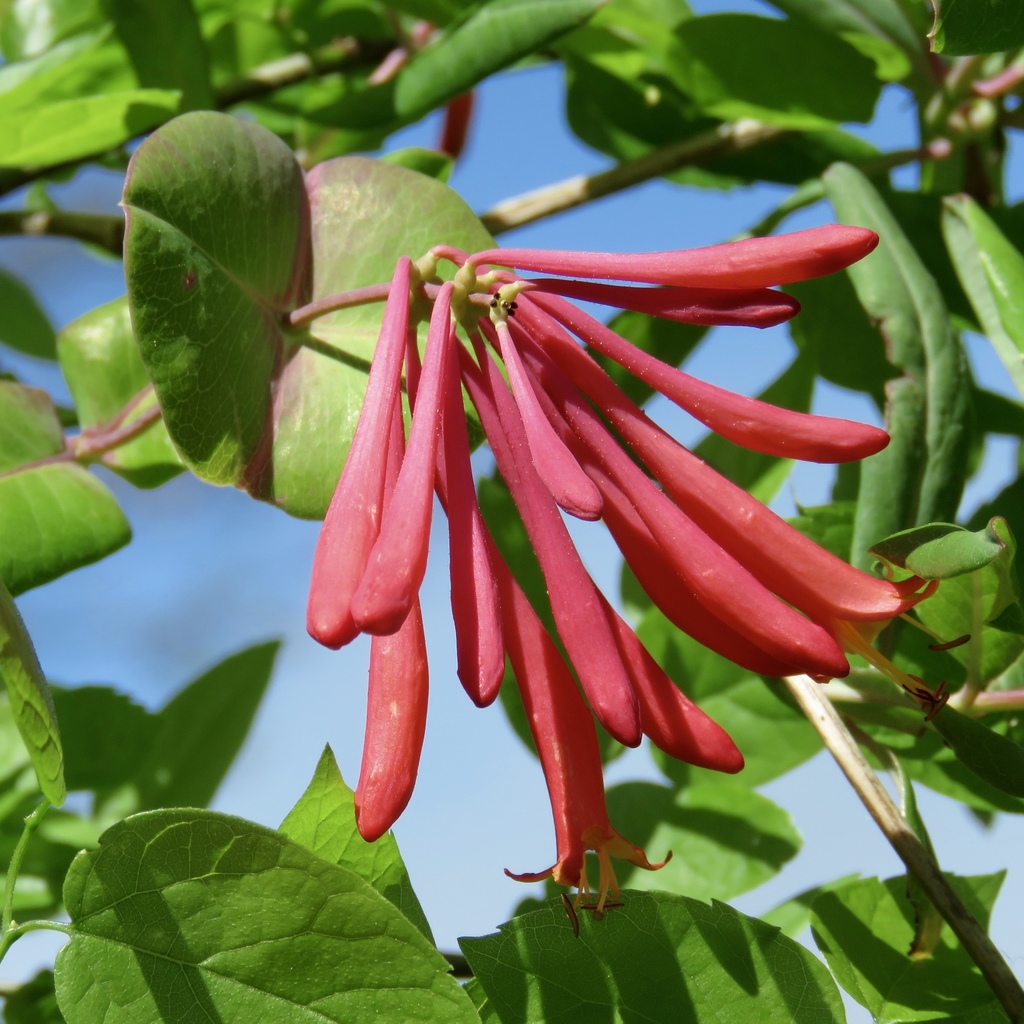
Coral Honeysuckle, Lonicera sempervirens
Hummingbirds, nectar
Snowberry Clearwing Moth, host
Spring Azure Butterfly, host
Pipevine Swallowtail, nectar
Duration: Perennial but leaves are evergreen
Bloom Time: March-June
Bloom Color: Red
Water Use: Medium
Light Requirement: Sun, Part Shade
Soil Moisture: Moist
Cold Tolerant: yes
Soil Description: Various soils, but rich preferred. Sandy, Sandy Loam, Medium Loam,
Clay Loam, Clay, Caliche type. Both lime and acidic OK.
Conditions Comments: Coral honeysuckle requires light, good air circulation, and
adequate drainage to prevent powdery mildew. Some structural assistance may be
necessary to help it begin climbing. Flowers best when given more sun. Tolerates poor
drainage for short periods.