


by Becky McGraw-Wall, PWL Member
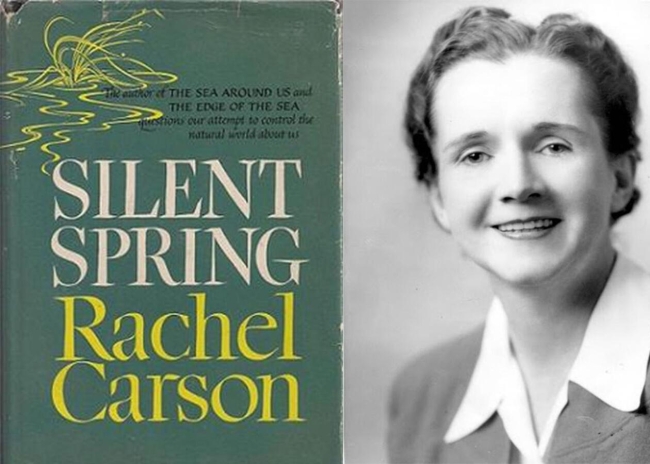
I had heard about Silent Spring, by Rachel Carson as a kid, having 2 biologist parents, but never got around to reading it until a few years ago.When I finally did, it was a mind-opening experience. I thought that reading a book written in 1962 would be more for historical interest. But I found the words and theme of Silent Spring to be as relevant today as it was more than 50 yrs ago. I now understand why it is a NY Times bestseller and honored as one of the most influential scientific books of all time.
Carson, a marine biologist, methodically documents the unintended harmful effects of widespread use of pesticides on wildlife, in particular on the bird population. She vividly describes the “silent spring” resulting from the resultant decline in bird populations in the beginning of the book: “Over increasingly large areas of the United States, spring now comes unheralded … and the early mornings are strangely silent where once they were filled with the beauty of bird song.”
Silent Spring is a groundbreaking environmental science book and is widely recognized as being pivotal in launching the modern environmental movement. In it, she raises public awareness of the environmental effects of pesticides on the ecosystem. The book highlights the concentration and persistence of DDT in the ecosystem, contaminating the soil, the bodies of water, the groundwater, and ultimately impacting all the life that lives in, eats or drinks from the contaminated soil or water, including humans. She also exposes the potential carcinogenic effects of these chemicals on human health. Carson demonstrates the interconnections between ecosystems and the importance of protecting our environment.
Silent Spring led to widespread public concern over pesticide use and advocacy for change. Carson’s clear and unmistakable criticism of indiscriminate pesticide use in America led to significant changes in public policy. Her work sparked an investigation by the Kennedy administration into the practices of the chemistry industry, and is largely responsible for the eventual banning of DDT in the US and the establishment of the Environmental Protection Agency. It’s fascinating to think of the prescience involved with writing an environmental book in the 1960s that is still so relevant today. Silent Spring demonstrably sparked both public awareness and environmental interest, and is an example of how one person with conviction and valid scientific observations can bring about change.