


by Shaila Palamand, PWL Member

Often considered exotic, spooky, and even potentially dangerous, carnivorous plants are in fact native to our area and are not only beautiful, but also beneficial.
Four species of carnivorous plants can be found right here in East Texas: Pitcher Plants (Sarracenia), Sundews (Drosera), Butterworts (Pinguicula), and Bladderworts (Utricularia). They typically live in wetlands and bogs – such as the Big Thicket National Preserve – and are able to thrive in the nutrient-poor soil of these areas by consuming insects and other small organisms, which provide them with the nitrogen and phosphorus needed for photosynthesis and growth. Based on their diet, some of these plants may be characterized as “insectivorous” rather than carnivorous.
Flytraps may be the most widely recognized type of carnivorous plant, but our East Texas species have different methods and mechanisms of catching prey:
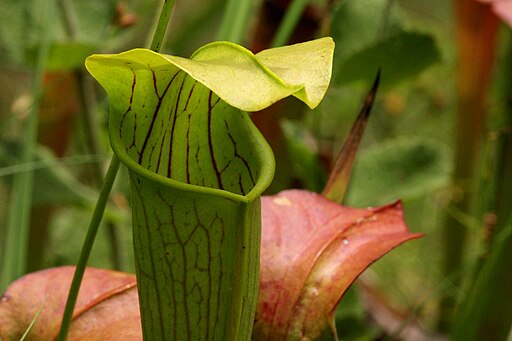
Pitcher Plants have tall, brightly colored tubular structures (like pitchers) filled with nectar; Insects that investigate are prone to falling into the pitcher and drowning, and are subsequently digested by the plant.
“Sarracenia alata – Flickr – aspidoscelis (1)” by Patrick Alexander from Las Cruces, NM is marked with CC0 1.0
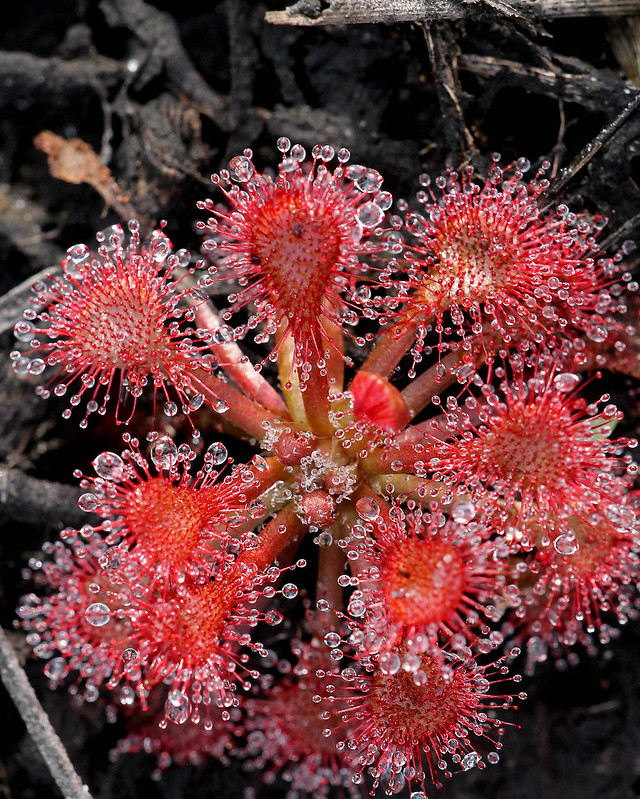
Sundew leaves have small hair-like tentacles tipped with a sticky substance resembling dew drops. Insects are attracted to the leaves, perhaps mistaking the glistening droplets for water or nectar. Those that land are likely to get stuck and ultimately consumed as the plant secretes digestive enzymes through its leaves.
“Pink Sundew (Drosera capillaris)” by Mary Keim is licensed under CC BY-NC-SA 2.0.
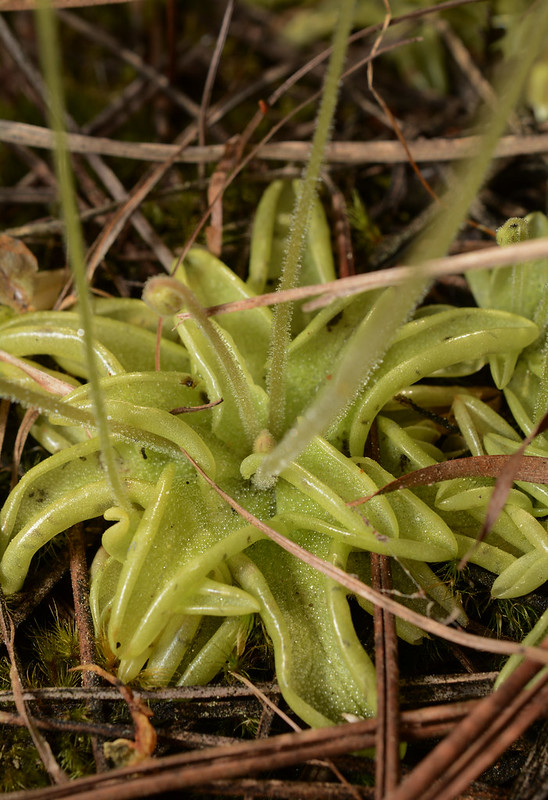
Butterworts have a similar trapping method but differ in appearance; their leaves are flat and waxy looking versus the hairy leaves of a Sundew. However, despite the absence of tentacles, Butterwort leaves are certainly quite sticky and effective at catching insects.
“Pinguicula pumila (31a)” by siddarth.machado is licensed under CC BY-NC-ND 2.0.
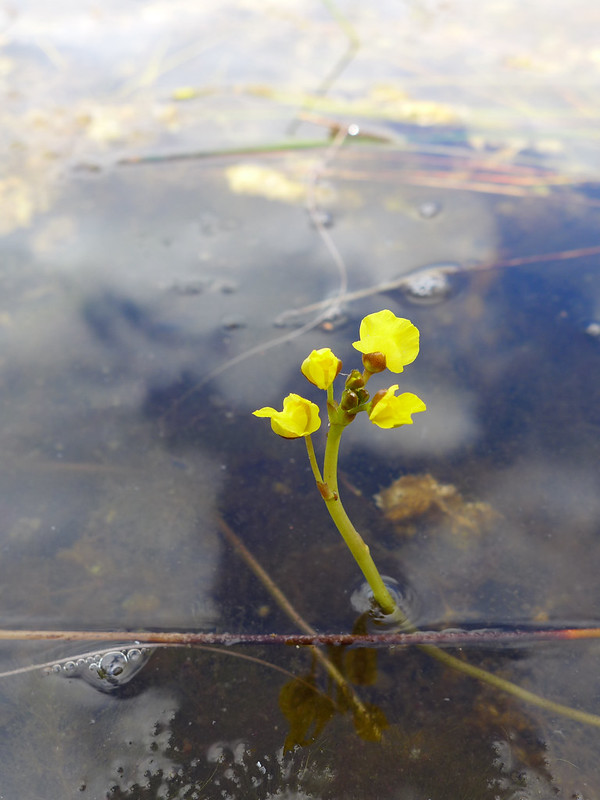
Bladderworts are different still; they live in (rather than around) water, and their diet consists of aquatic organisms (including insects). Bladderworts grow long vertical stems underwater with small yellow flowers appearing above the surface. The underwater leaves have tiny hairs and bladder-like traps that activate when the hairs are triggered by aquatic creatures (such as water fleas, mosquito larvae, tiny fish, tadpoles and crustaceans).
“Utricularia radiata 2” by Scott Zona is licensed under CC BY-NC 2.0.
None of these species are harmful to humans, and all of them play an important role in our ecosystem. Their hunting mechanisms are the key to their survival and also happen to serve as a natural method of controlling insect populations.
Carnivorous plants in East Texas enter a phase of winter dormancy from approximately October to February, but there’s still time this year to see them in an active state. The best place to see them is the Big Thicket National Preserve.
Learn more:
https://www.nps.gov/bith/learn/nature/carnivorous-plants.htm