


By: Trina Geye
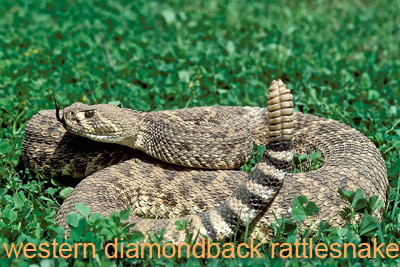
The western diamondback rattlesnake can vibrate its rattle sixty times per second. Most of the time, it doesn’t. The primary defense is camouflage—stay still, blend in, let the threat pass. The rattle is secondary, deployed only when camouflage has failed and something is too close. It is not a reflex. It is a decision.
That decision is expensive. Rattling reveals the snake’s position. It burns energy. It invites attention from predators that might not have noticed. The snake rattles anyway, because the alternative is worse: a strike costs venom that takes days to replenish and risks injury to the snake even if the bite lands. The rattle exists because warning is cheaper than fighting. It is an evolutionary cost-benefit calculation, and it has worked for millions of years.
If you’ve heard one unexpectedly, you already know this in your body. The freeze response—where your muscles lock before your brain catches up—is not learned. It’s primate hardware, shaped by our lineage’s long coexistence with vipers. We are one of the species the rattle evolved to reach. It works on us because it was always meant to.
The Legal Vacuum
The western diamondback is classified as nongame wildlife in Texas. No closed season. No bag limits. No possession limits on private property. No mandatory reporting of how many are collected or killed. The state does not know—and does not ask—how many rattlesnakes are removed from the landscape in a given year.
Compare that to the bobcat, a species that is thriving: regulated trapping season, CITES pelt tags for export, population monitoring by TPWD. Or the timber rattlesnake, the only protected venomous snake in Texas, which requires a scientific collecting permit. The western diamondback—the most common and ecologically important venomous snake in the state—gets nothing.
The Sweetwater Rattlesnake Roundup has been held annually since 1958. In 2016 it killed a record 24,262 pounds of western diamondbacks. Recent kills have been around 5,000 pounds. Collectors flush snakes from winter dens using gasoline—a practice that damages or kills at least 350 other species that share those dens. Texas is one of the last states where gassing is still legal. In 2013, TPWD received a petition to ban it, assembled a Snake Harvest Working Group, received over 9,000 public comments overwhelmingly in favor of the ban, and then didn’t act.
The roundup justifies itself on three grounds: public education, public safety through population control, and venom collection for antivenom. Herpetologists have challenged all three. Rattlesnake populations self-regulate through prey availability. Venom collected under roundup conditions doesn’t meet sterile standards for antivenom production. And Georgia’s rattlesnake roundups transitioned to no-kill wildlife festivals years ago—with equal or greater revenue. Texas has not followed suit.
I grew up around rattlesnake collection. My father was an auto mechanic who gathered diamondbacks and kept them in a 50-gallon barrel in his shop—about ten at a time, though to a preschooler it seemed like more. He and his friends thought they might make a little money selling to the roundup, but they didn’t really know how it worked. The Sweetwater Roundup was the week before they started hunting, and after all those snakes came in, the price dropped. So it was competition and speculation more than income.
My friend and I—both preschool-age girls whose mothers worked nearby—would catch bugs and feed them to the rattlesnakes. Our mothers knew the snakes were in the shop. They did not know we were playing with them.
My father killed those snakes eventually. And here is what I understand now that I didn’t then: for the snakes, the barrel was the roundup. Same process—collected and killed. The barrel just didn’t have the spectacle. No public skinning, no fried rattlesnake, no Miss Snake Charmer. It was the same machinery, stripped down to what it actually was: snakes in a container, waiting to die.
The girls feeding them crickets didn’t change what was going to happen. It just made it harder to dress up.
I live on 27 acres outside Hico now—limestone ledges and cedar breaks. Prime diamondback habitat. I haven’t encountered one on the property yet, but I will. When I do, I intend to let it be.
That’s not naïveté. A single diamondback can take hundreds of rodents a year, and no other predator in this landscape fills that niche the same way. The species is genuinely dangerous—responsible for nearly all serious envenomations in Texas—and I don’t minimize that. But dangerous is not the same as wrong. Approximately one person per year dies of rattlesnake bite in Texas, and it is almost always someone who was handling or refusing to move away from the snake. The rattle gives you a choice. The question is whether you take it.
We’re coming into the season when this matters most. Diamondbacks in Central Texas begin emerging from winter dens in late March and April, and spring is when they’re most mobile—males especially, moving between den sites and summer range, sometimes covering more than two miles. They’re diurnal in cooler weather, so spring encounters are daytime encounters: along south-facing rock ledges, dry creek beds, brushy edges, anywhere the morning sun hits. By summer they shift to crepuscular and nocturnal activity, but right now they’re on your schedule. Fall brings a second peak when mating activity increases movement again.
Practical coexistence on rural property is straightforward: keep brush and rock piles away from high-traffic areas, maintain short grass around the house, watch where you put your hands and feet during spring and fall, and give the snake the option to leave. Most of them will. They don’t want this encounter any more than you do.
The rattle is a warning. It costs the snake something to give it. We evolved to hear it, and for most of our shared history, we did—we heard it and we moved. The roundup is what happens when we stop hearing it as a warning and start hearing it as an invitation.
Further Reading
Allf, B. C., A. M. Sparkman, and D. W. Pfennig. (2016). “Behavioral Plasticity and the Origins of Novelty: The Evolution of the Rattlesnake Rattle.” American Naturalist 188(4).
TPWD Snake Harvest Working Group Reference Documents (2016). tpwd.texas.gov
Weir, J. (1992). “The Sweetwater Rattlesnake Round-up: A Case Study in Environmental Ethics.” Conservation Biology 6:116–127.
The Rattlesnake Conservancy. savethebuzztails.org