


• Skip to primary navigation
  • Skip to main content
  • Skip to primary sidebar
Good Water ChapterGood Water Chapter
  • Home
  • Training Class
    • Training Class Information
    • 2025 Fall Training Class Waitlist
    • Training Class Google Calendar
  • Sign Up Genius
    • Chapter Meeting Hospitality Signup
    • Youth Development Signup
    • Berry Springs Bluebird Nest Watch
    • Bat Volunteers at McNeil Bridge
    • Lake Creek Bluebird Watch
    • Adopt-A-Loop Doeskin Ranch
  • Junior Master Naturalists
  • Youth Development Committee
    • Youth Development Calendar
  • VMS
  • Member Area
    • Reimbursement Forms
      • GWMN Reimbursement Form
      • GWMN Vendor Payment Request Form
      • GWMN Affidavit of Expenditure Form
    • Order your CoCoRaHS rain Gauge
    • Pay Dues Online
    • Texas Volunteer Policy Member Yearly Forms
    • Good Water Membership Requirements
    • Texas Master Naturalist Volunteer Policy
    • Minutes
      • Executive Board Minutes
        • 2022 Executive Board Minutes
        • Historical Minutes
      • Chapter Meeting Minutes
        • 2022 Chapter Meeting Minutes
    • Chapter Videos
  • Contact Us
    • Contact a Board Member
    • Contact a Project Leader
  • Donate
  • Chapter Volunteer Calendar
  • Login
Search

June 2, 2013 by Mary Ann Melton

Killdeer


Killdeer

Killdeer


Killdeer are common year round birds in Williamson County. Although they are technically shorebirds in the plover family, they have adapted well to the urban environment. Easily recognized by the two black bands across the upper breast they have white wing stripes are that are visible in flight. They can be found in parks, yards, pond edges, and even parking lots. They prefer open ground with low vegetation. Killdeer spend their time roaming the ground in search of food. They eat insect larvae, snails, grasshoppers, and earthworms from dry ground and crayfish and aquatic insect larvae from pond edges. Killdeer have a short, high pitched call when they fly that almost sounds like “killdeer.” They call as they fly and they call to round up their chicks. Killdeer groups are called a “season” of killdeers.
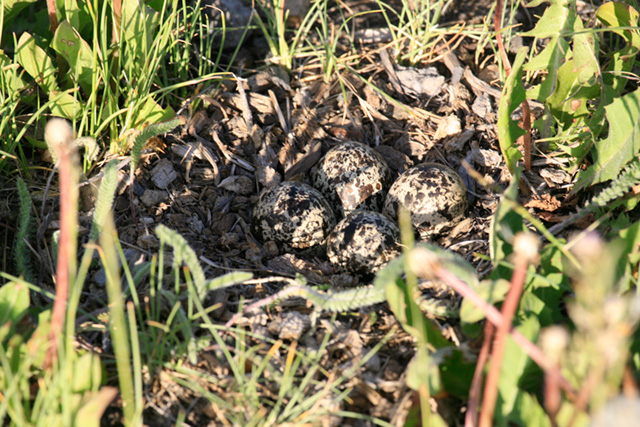
 

Killdeer nest & eggs

Killdeer nests are very simple – they lay their eggs directly on the ground in pastures or even in gardens. They will feign a broken wing to lure predators away from the nest. But they will also charge large grazing animals in an attempt to get them to change their route from the nest. It takes about 24 to 28 days for the eggs to hatch after all the eggs have been laid in the nest. Killdeer chicks look like miniature adults. They hatch with open eyes, ready to run and follow the adults. While they can scatter over the feeding grounds far from their parents, they quickly answer the parental call to rejoin the family group. The adult killdeer will also surround her chicks with her wings when she thinks there is danger.

Share this:

  • Click to share on X (Opens in new window) X
  • Click to share on Facebook (Opens in new window) Facebook

Related

Filed Under: Good Water Blog Tagged With: birds, eggs, killdeer, nature, nesting, nests

Subscribe

Enter your email address:

Delivered by FeedBurner

© 2025 Texas A&M University. All rights reserved.

  • Compact with Texans
  • Privacy and Security
  • Accessibility Policy
  • State Link Policy
  • Statewide Search
  • Veterans Benefits
  • Military Families
  • Risk, Fraud & Misconduct Hotline
  • Texas Homeland Security
  • Texas Veterans Portal
  • Equal Opportunity
  • Open Records/Public Information
 

Loading Comments...
 

You must be logged in to post a comment.