


By Sharon Hanick, Member
No, not the video game GenXers grew up with in the late 70s. The invaders this article is referring to are Brown-Headed Cowbirds. In the birding community, this species is often frowned upon, and I could go so far as using the term “despised”. Why, you might ask? Bird watchers love all birds, right? Mmmmm, not exactly. To understand why, let’s first break down its scientific name, Molothrus ater, molothrus meaning “greedy fellow, vagrancy” and ater, meaning “black, dark and gloomy”. With these descriptions, we have the makings of a graphic novel villain. The reason behind the “dislike” is solely due to the fact that this species engages in what is known as “brood-parasitic breeding”.
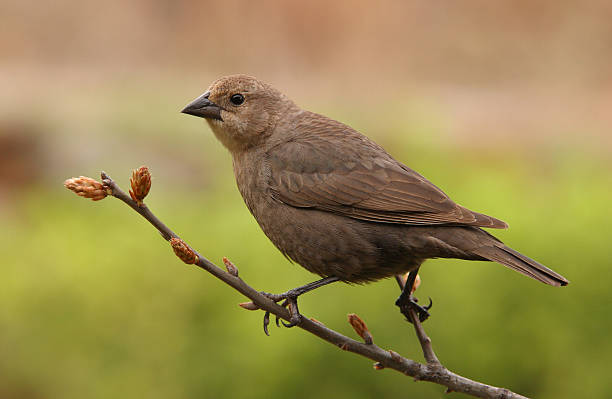
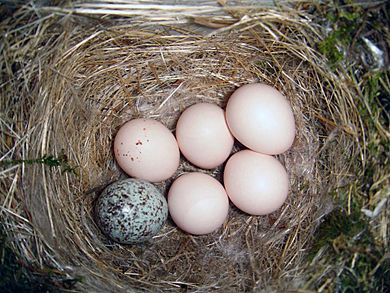
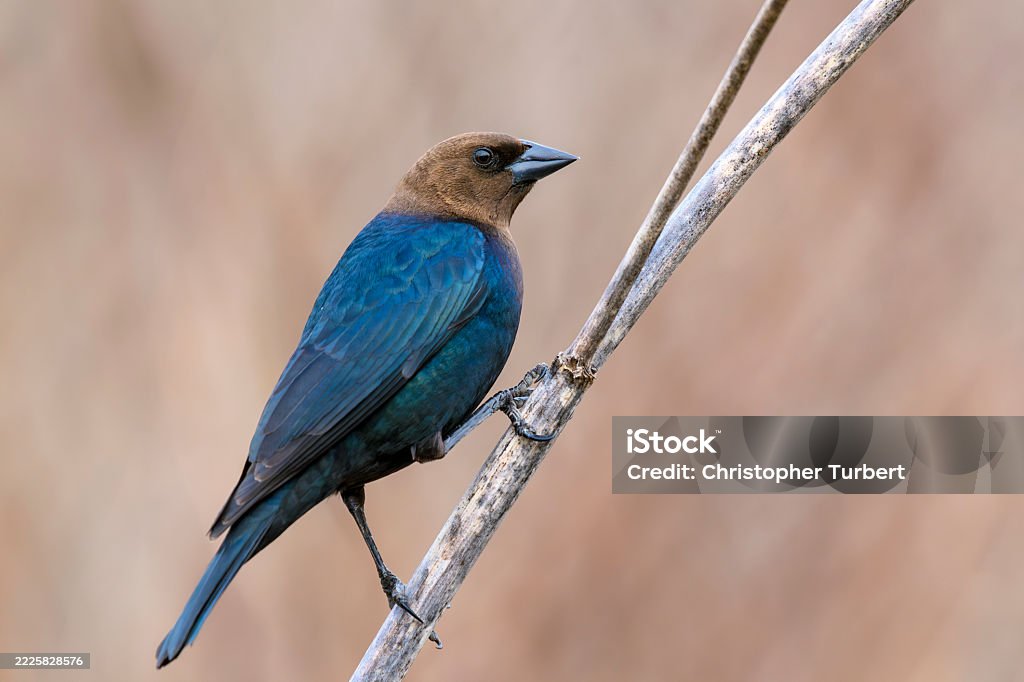
Sounds ominous, right? This term refers to the practice of laying one’s eggs among the eggs of a different species and then abandoning them to be raised by the parents of that nest. Indeed the epitome of a dead-beat parent! The cowbird assumes no responsibility. Dumping its parental duties on another brings added stress, and oftentimes imminent mortality for the eggs and chicks of the surrogate parents. he reason behind the “dislike” is solely due to the fact that this species engages in what is known as “brood-parasitic breeding”. Sounds ominous, right? This term refers to the practice of laying one’s eggs among the eggs of a different species and then abandoning them to be raised by the parents of that nest. Indeed the epitome of a dead-beat parent! The cowbird assumes no responsibility. Dumping its parental duties on another brings added stress, and oftentimes imminent mortality for the eggs and chicks of the surrogate parents.
How did this brooding behavior begin? Did some of the birds just decide one day that they weren’t ready to be parents? This evolutionary strategy bypassed the high energy costs of building nests and raising young, allowing females to invest heavily in producing more eggs per season. This enabled them to keep up their nomadic lifestyle following herds of bison across the great plains foraging heavily on insects and parasites. This kept the herds healthy.
How exactly does this play out? The cowbird eggs usually hatch sooner than the other species’ eggs, giving them a head start. This means that they get the food first, grow faster and in turn become so greedy that they engage in the ultimate form of sibling rivalry, tossing the other eggs or hatchlings from the nest or simply smothering them. Some bird species can actually identify these eggs as not their own. Those that can identify and are large enough to do so, simply kick them out or puncture the egg with their beaks and give them a good fling. However, this is a problem for smaller birds who cannot successfully rid their nest of the unwanted eggs. For some species such as Kirtland’s Warblers and Black-capped Vireos, the actions of this cowbird have led to their decline.
With this information one may be tempted to “help-out” by removing the cowbird eggs. However, this is illegal. Take heart, as there are official programs in place involving targeted trapping and culling along with restoring large tracts of habitat to limit cowbird access.
As they aided the bison herds of the past these cowbirds are also beneficial to livestock today. They also have a very melodious song. I hear it every morning as I watch a pair at my feeders.