



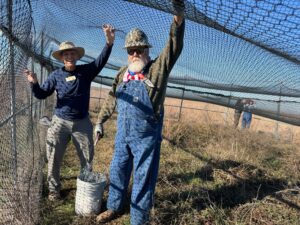


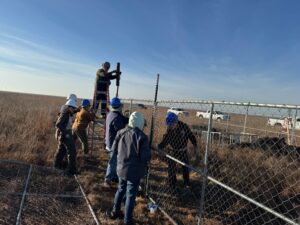


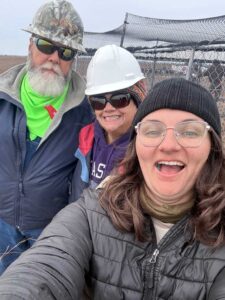


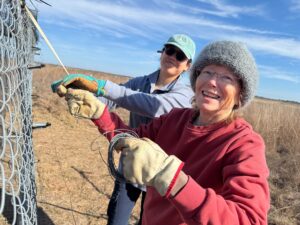

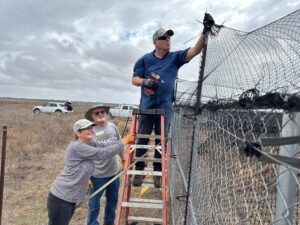
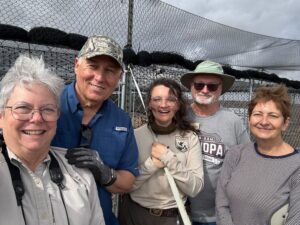

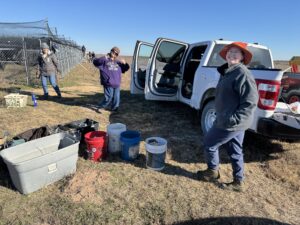
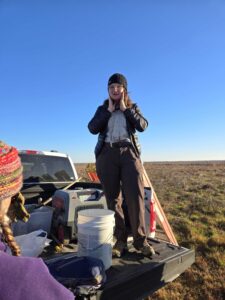
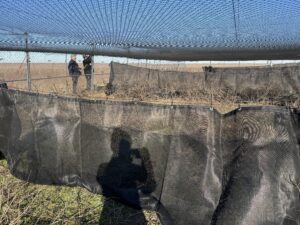
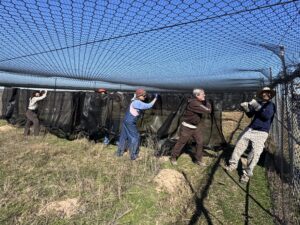
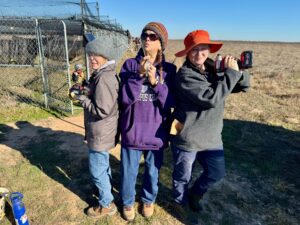
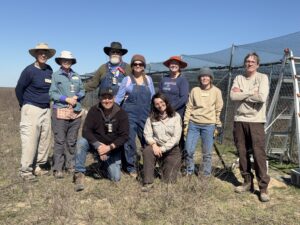
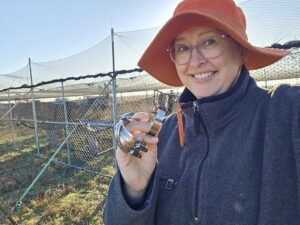
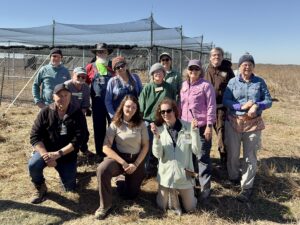
For the past two weeks, under supervision of Attwater Prairie Chicken National Wildlife Refuge staff, two Texas Master Naturalist chapters have been hard at work helping to spruce up acclimation pens. In anticipation of the arrival of captive-bred young birds later this year, volunteer workers answered the call for help.
As their name suggests, these large, protected pens are set up to help acclimate the birds to the area before being released in the refuge. This work is a critical step in the successful reintroduction of the endangered Attwater’s Prairie-Chicken. Acclimation pens are used for a “soft release,” allowing captive-bred birds to spend approximately two weeks adjusting to the sights, sounds, and weather conditions of the native prairie before full release onto the refuge. The pens are designed to be predator-proof and movable to reduce disease risk, and regular maintenance ensures they remain safe and effective.
Over multiple workdays, volunteers from both the Coastal Prairie and Gideon Lincecum Texas Master Naturalist chapters, U.S. Fish and Wildlife Service staff, and refuge volunteers came together to repair netting, tighten paracord ceilings, patch holes, remove invasive plants, install predator deterrents such as electric fences and spikes, and reinforce fencing across several pens. Despite frozen fingers, sore knees, and plenty of time spent kneeling in what volunteer leader Jean Stipelcovich dubbed the “pray-ery,” spirits stayed high. Stipelcovich captured the attitude of crews who showed up ready to work no matter the weather perfectly: “Frozen fingers – warm hearts,”. Volunteers participated in morning and/or afternoon shifts, building on one another’s progress with good humor, teamwork, and a shared sense of purpose. By the end of the two weeks, pens were transformed, plans were in place for final adjustments, and most importantly, the refuge is now ready to welcome the next generation of Attwater’s Prairie-Chickens home.
Once a defining sound of the Gulf Coast prairie, the Attwater’s Prairie-Chicken has experienced a dramatic decline over the past century. “The sounds of male Attwater’s prairie-chickens could be heard throughout the gulf coast prairies of Texas and Louisiana in the early 1900s, when they numbered to about 1 million birds,” (Tympanuchus Cupido Attwateri | U.S. Fish & Wildlife Service, n.d.). Today, the species is found in only two Texas counties. Habitat loss and fragmentation, historic overhunting, invasive species, and increasing vulnerability to predators and extreme weather have pushed the bird to the brink, leaving less than one percent of its original coastal prairie habitat intact and making every surviving bird critically important to the species’ future.
Established in 1972 near Eagle Lake, Texas, Attwater Prairie Chicken National Wildlife Refuge plays a central role in the species’ recovery. Refuge staff have focused heavily on controlling red imported fire ants (identified as a major factor in chick mortality) beginning in 2014 (Invasive Fire Ants Make Problems for Attwater’s Prairie Chicken | U.S. Fish & Wildlife Service, 2017). These efforts have paid off, leading to increased native insect populations and improved chick survival; between 2012 and 2016, the wild population increased from 48 to 130 birds. Protecting such a small population requires constant vigilance of the refuge staff to safeguard what remains of this rare and iconic prairie species.
Want to get your boots dusty or just your soul a little quieter? There are plenty of ways to connect with the work happening at Attwater Prairie Chicken National Wildlife Refuge. Texas Master Naturalist volunteers work on the refuge every Friday from 8:00 a.m. to 12:00 p.m., and anyone is welcome to join in and lend a hand. Prefer to visit instead? The refuge is free to explore and open to the public from 8:00 a.m. to 3:30 p.m., Tuesdays through Saturdays, November through May; from June through October, the visitor center is open Thursdays through Saturdays, with the same hours. Whether you hike the trails or drive the auto tour, you’ll find wide skies, wildflowers, and abundant wildlife – including more than 250 bird species that use the refuge throughout the year. Bring your binoculars, listen to the prairie, and take your time – because even if you don’t spot the rare Attwater’s Prairie-Chicken, you’ll leave with something just as valuable: a deeper appreciation for the wild prairie and the people working to protect it.