


Standing here before this historical marker at Hans & Pat Suter Park in Corpus Christi, we are reminded not only of the Karankawa people but also of how history has been told. This sign, erected in 1979, reflects an earlier era’s understanding of Texas history, one shaped almost entirely by colonial sources. Words like “primitive,” “savage,” and “cannibal” jump out at us. These terms say more about the fears and biases of European settlers than about the Karankawa themselves.
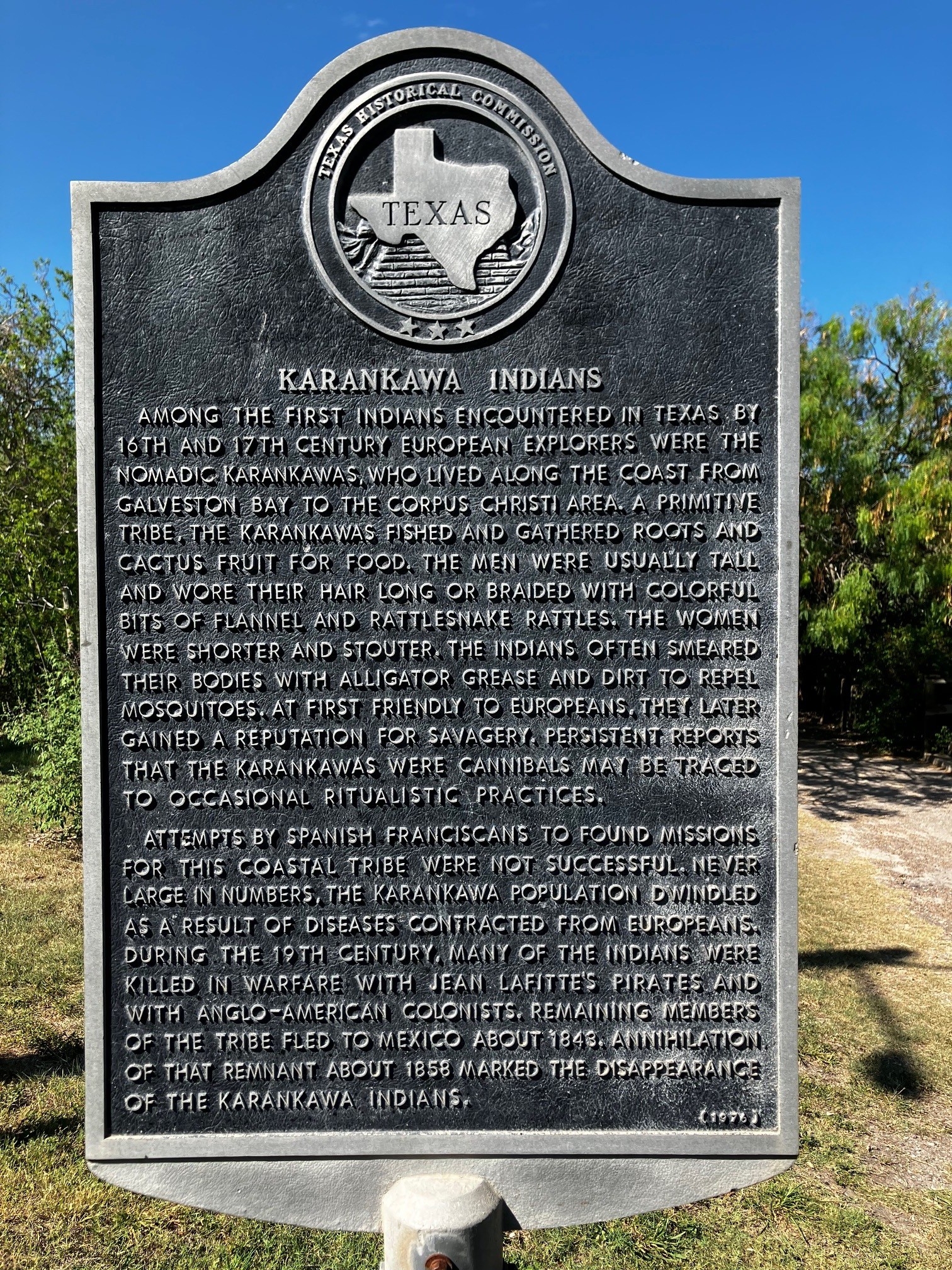
The Karankawa were coastal people, skilled at living along the bays and barrier islands. They fished, gathered plants, and moved seasonally to take advantage of nature’s resources. Early explorers noted their tall stature, their skill with the bow, and their use of body paint and protective oils. These details give us a glimpse of a rich and adaptive culture.
This sign, however, reduces their story to one of disappearance. It tells us they were “annihilated” by the 1850s, but that narrative erases the Karankawa descendants who still live today, working to preserve and reclaim their heritage. For them, the story did not end—it continues in memory, tradition, and renewed identity.
So when we read this plaque, we should also read between the lines. It teaches us about the Karankawa, yes, but it also teaches us how public history once framed Native peoples through the eyes of outsiders. Today, our task is to look deeper, to honor the Karankawa not as relics of the past, but as resilient people whose voice still matters.
Beneath the Roadway: The Ancient Burials of Oso Bay

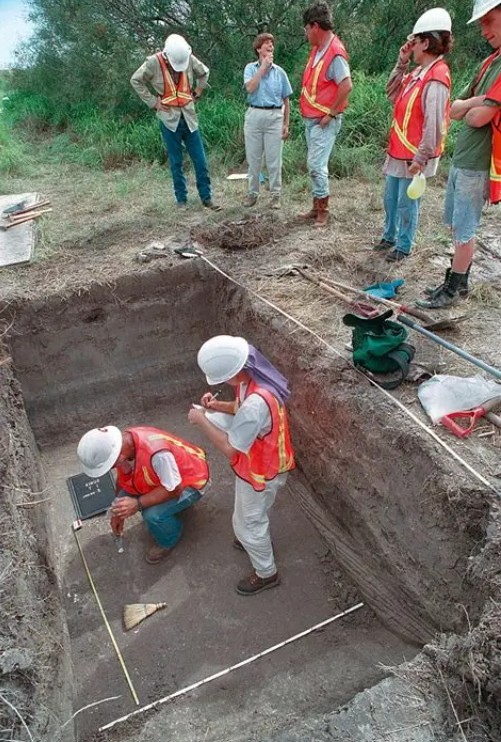
Long before modern roads and neighborhoods, this landscape was a sacred ground. Near Oso Parkway lies Cayo del Oso, one of the largest ancient cemeteries on the Texas coast. For nearly 3,000 years, generations of coastal peoples laid their loved ones to rest in a great clay dune beside Oso Bay.
Archaeologists have documented hundreds of burials here, some accompanied by shell pendants and tools. These discoveries reveal a culture deeply tied to the bays, barrier islands, and lagoons of the Coastal Bend. The people who lived here—ancestors of those later called Karankawa—were skilled fishers, hunters, and foragers, shaping their lives around the rhythm of tides and seasons.
Storms in the early 1900s exposed many remains, drawing attention to the site. Later excavations revealed just how large and ancient the cemetery was. Though these studies provided valuable knowledge, they also remind us of the fragility of sacred places when exposed to disturbance.
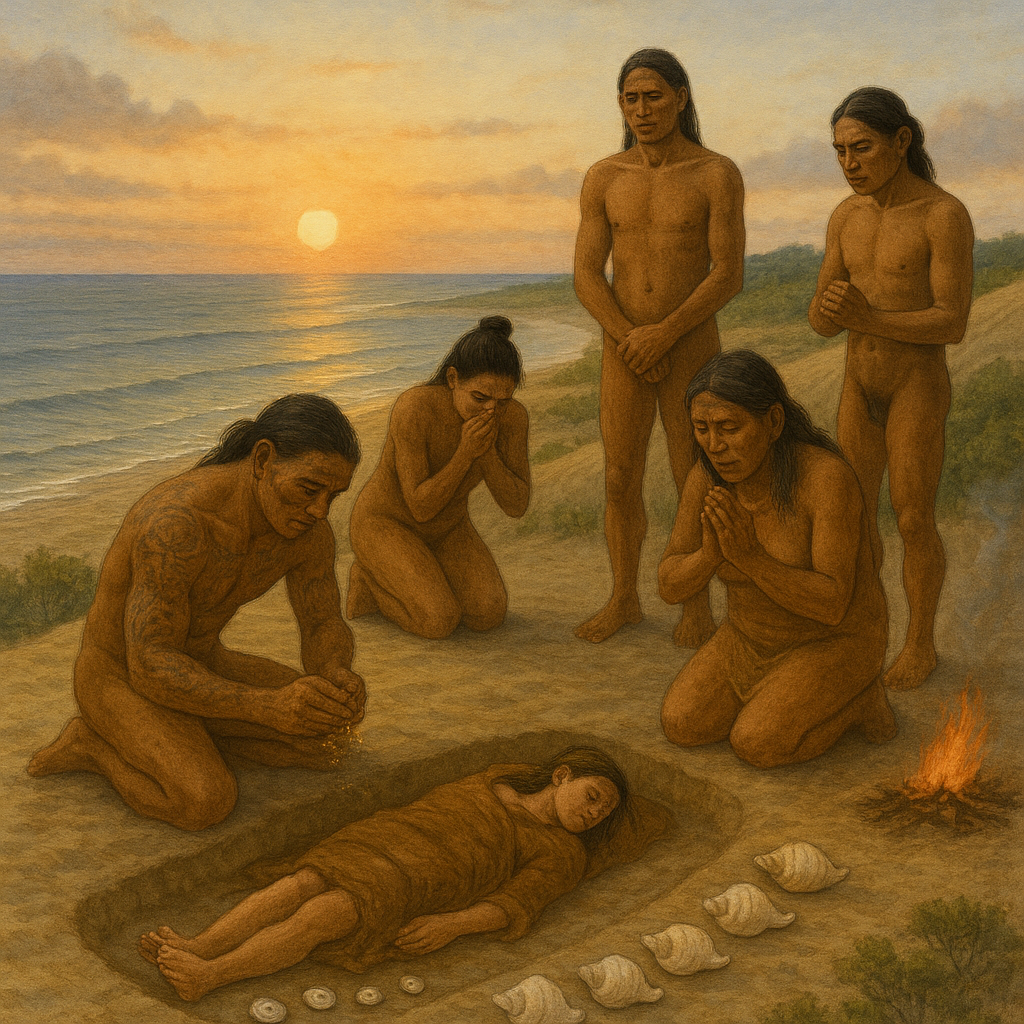
Modern Karankawa still lament the insensitive treatment of a young woman found along the Oso.
Today, Oso Parkway crosses a landscape layered with memory. Development and erosion continue to threaten these fragile sites, but Indigenous descendants and cultural advocates call for recognition and respect. To them, the story of Cayo del Oso is not finished—it is a living heritage.
As you travel this road, pause to remember what lies beneath: a record of human resilience and a place of deep spiritual meaning. This land has always been a homeland, and it asks us to honor those who came before.
ChatGPT was utilized for these narratives.