

By Randy Bissell
Beach trash is not simply a nuisance, it’s a visible sign of the public’s neglect, disconnection, and disregard for the land and sea. Picking it up is not custodial work. It’s conservation.
Dawn and I began picking up trash on Mustang Island in 2016, long before we wore anybody’s volunteer badge. It started as a way to give our Sunday beach walks a purpose. Each bottle cap, the fishing line, and every plastic scrap we removed was a small gesture of care. It felt right.
After Hurricane Harvey, our efforts intensified. Debris blanketed the island—plastic, lumber, rope, barrels. The Mustang Island State Park staff were overwhelmed. We spent hours helping clear the worst of it. How could we help?
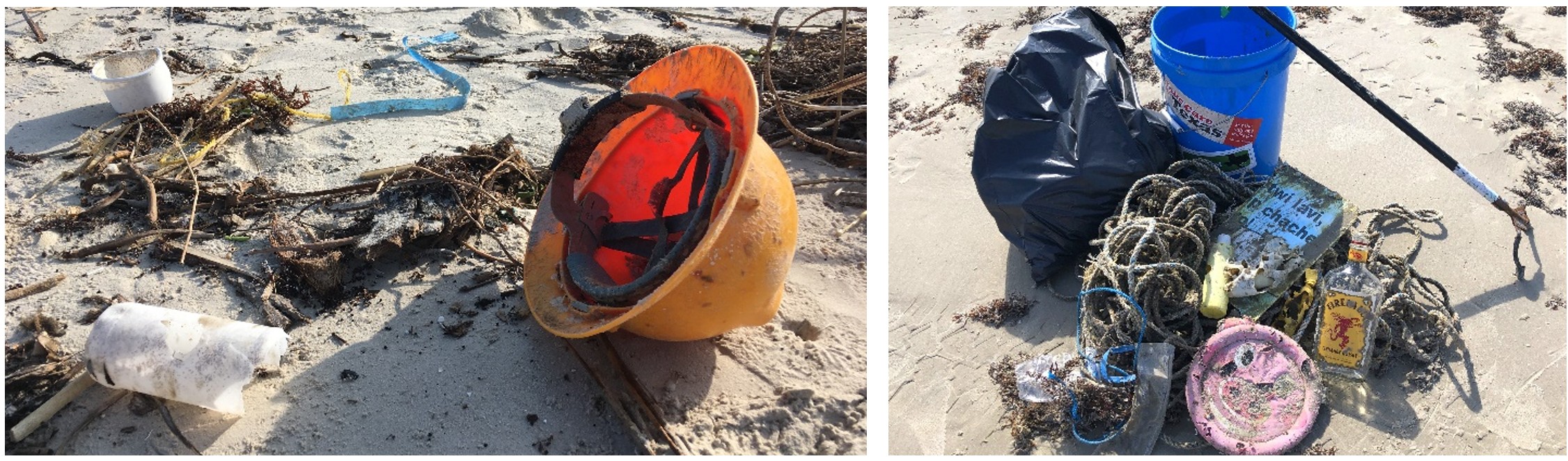
Through the many seasons, we’ve found plastic debris bearing the bite marks of sea turtles, mistaking it for food. Seeing that—again and again—changes you. What is the role of a true “beach-lover” if not to help? We adopted Mustang Island through the GLO’s Adopt-A-Beach program in 2018. A year later, we joined the Texas Master Naturalist program. To us, this vital work clearly fits under the “Resource Management” category for our local parks. As TMNs, we protect habitat, reduce hazards, and restore dignity and access to public spaces.
Our work may be simple and unglamorous, but it is not small. People see us. Children help us. They ask questions. Some join in. With our encounters, folks walk away changed. In those moments, we become educators, models, and advocates for nature—often not saying a word.
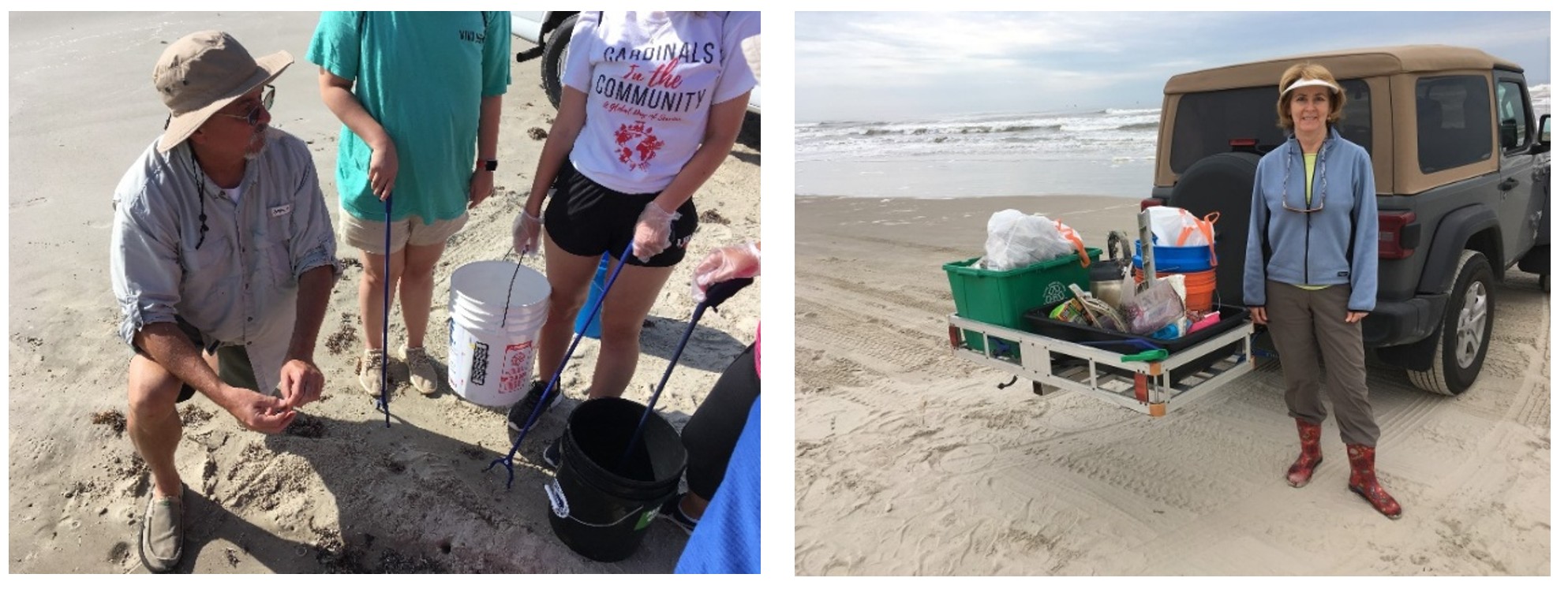
You know? I really like being a trashy Texas Master Naturalist™. Trash cleanup on our beaches and in our State Parks is “bona fide” volunteer service – however it gets classified.
So, we keep walking—one rack line, one snack bag, one turtle-bitten bottle at a time. Because the nature of trash is ultimately a test of our attention, our humility, and our willingness to act out our mission, “…the education, outreach, and service for the beneficial management of natural resources and natural areas within their communities across Texas.”