
Arica L. Shields, Class of 2022
This past weekend, I found myself in Harriett, Texas, just outside of San Angelo, for a little family time and an unexpected adventure. My mom’s place is a cozy retreat, complete with a fenced-in pool yard that used to house a large jacuzzi, now transformed into a perfect planter filled with native flora like red yucca, Mexican bird of paradise, and a variety of cacti. The chill of late February was in the air, with daytime temperatures in the 70s and temperatures threatening to dip into the 20s overnight, so I had a mission: zip up the greenhouse and ensure everything was tucked in for the night.
As I stepped into the pool yard, I was greeted by an unusual sound—a deep, vibrating hum that reverberated around me. Was it a bird, a plane, no, it was a Sonora Bumblebee! This fuzzy little creature, resembling a teddy bear with its golden and black fuzz, was clearly struggling. She bumbled about, making several attempts to escape the confines of the six-foot wooden fence, but she seemed lethargic, as if she had just emerged from her winter slumber.
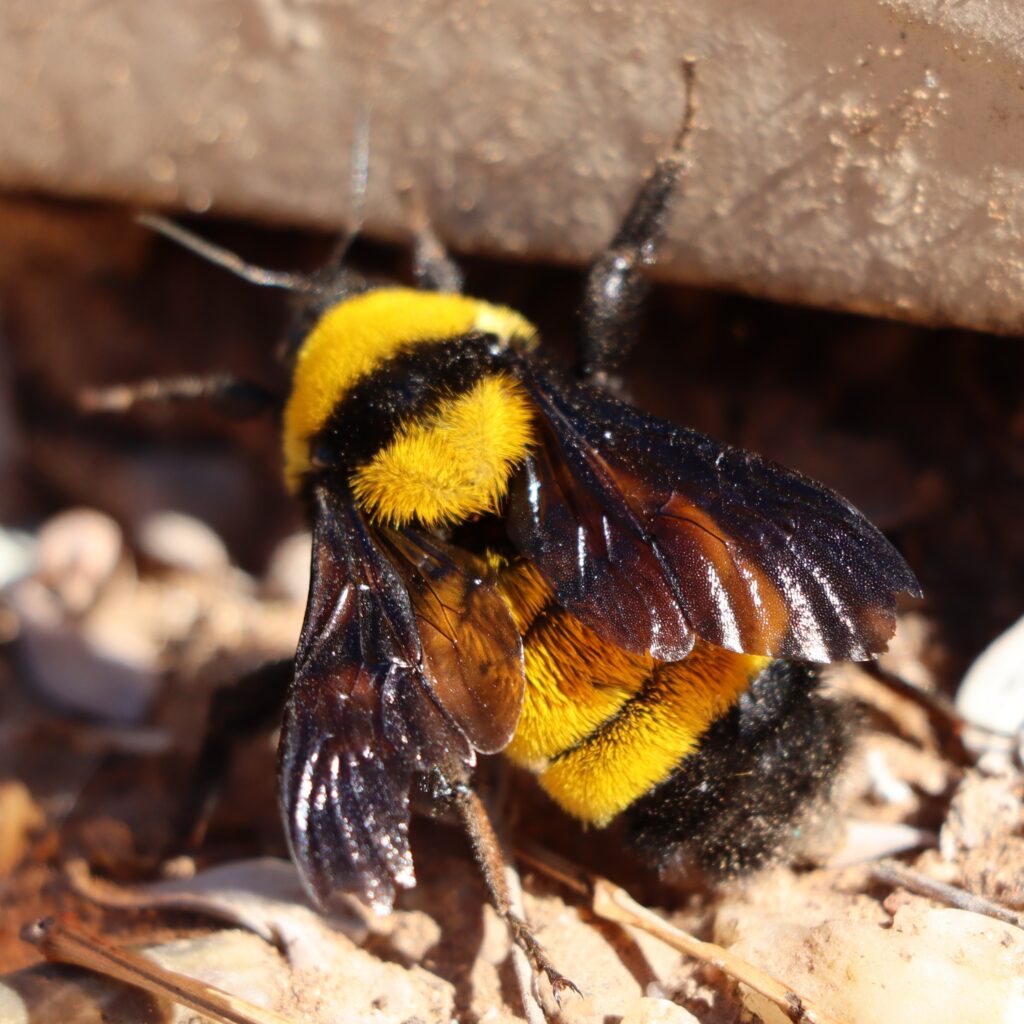
Feeling a pang of sympathy, I remembered that my mom had just refilled the hummingbird feeders. I decided to borrow some sugar water to give this little gal the boost she needed. As I approached her with a small saucer, she seemed uninterested, perhaps thinking I was trying to make her dinner! So, I made a daring decision to swoosh her gently into my palm, pouring a few drops of the sweet liquid into the creases of my hand.

To my delight, the moment she crawled onto my palm, she found the sugar water and eagerly sipped it up. We spent a magical few minutes together—me snapping awkward pictures and videos with one hand while she indulged in her sugary syrup. Usually they are moving so fast between flowers that I can’t get a clear picture so I was not going to miss this rare opportunity. I felt a bond forming, a connection between human and “humble-bee”, as Charles Darwin called them.
With nightfall approaching and temperatures dropping, I decided it would be best for her to spend the night in the greenhouse, where it would be warmer. I found the perfect potted plant and gently nudged her onto a leaf. She nestled in, and I swear I heard her sigh with relief.
The next early afternoon, I returned to the greenhouse, ready to release the bee. To my surprise, she greeted me at the entrance with a hop and a buzz, lifting a few feet into the air. I scooped her back into my hand, and this time, she vibrated her whole body against my palm. At this point I thought I had over expressed our supposed friendship and was half-expecting her to give me a sting, but instead, she seemed to be thanking me and saying her goodbyes. Just as I was about to fetch more sugar water, she decided it was time. She took to the skies—up, up, and over the fence, soaring off into the vast pasture beyond.

This encounter left me in awe of nature’s wonders. I couldn’t help but dive into some research about bumblebees afterward and learned that only the queen bumblebees survive the winter, emerging in early spring to start new colonies. So I assisted the Queen herself, I suppose I was her royal servant and would “bee” glad to do it anytime again.