
Follow our progress as the Texas Master Naturalist Lost Pines Chapter creates a space that will benefit both pollinators and our community
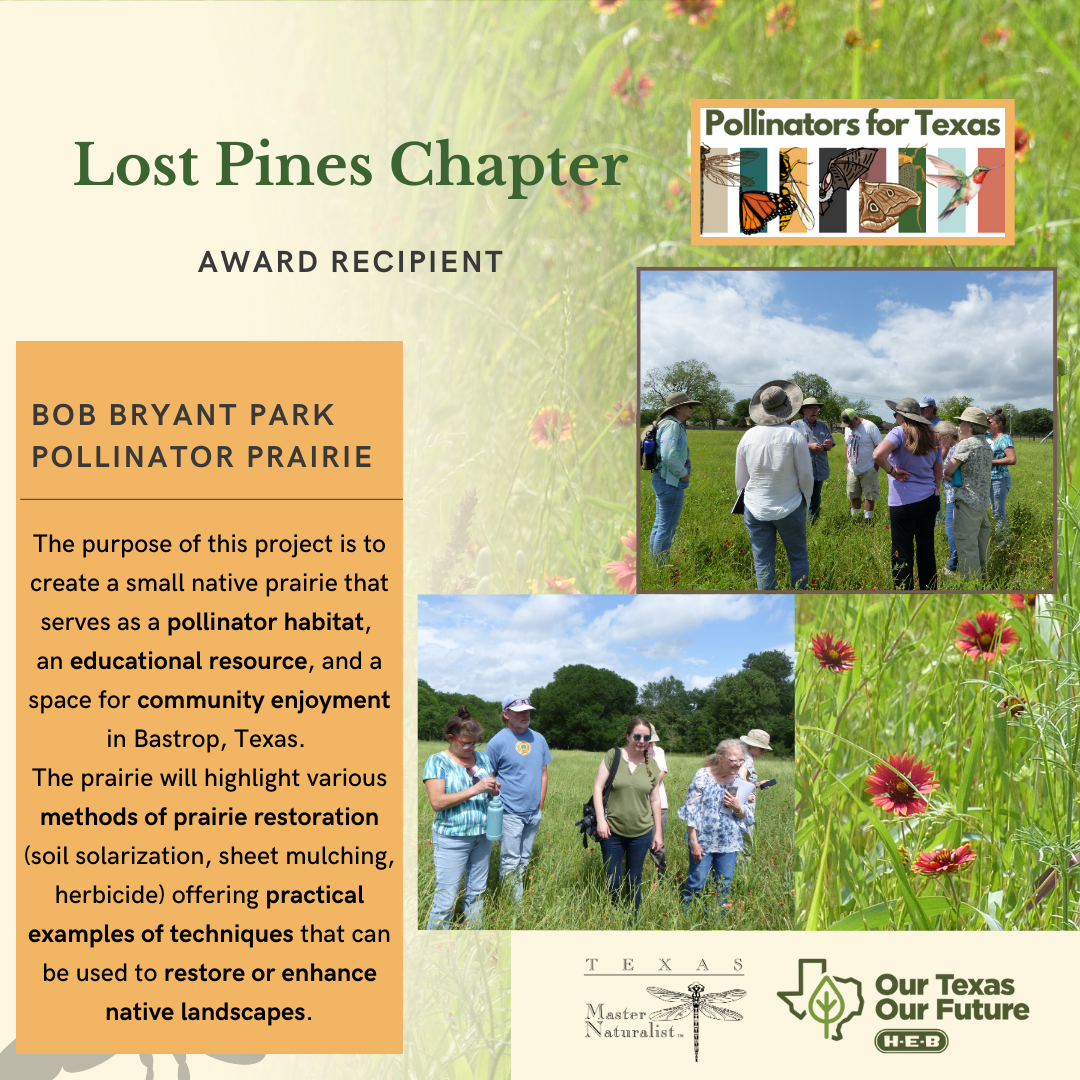
In partnership with Pollinators for Texas, sponsored by H-E-B Our Texas Our Future, we aim to create a 3-acre native prairie within Bob Bryant Park that serves as a pollinator habitat, an educational resource, and a space for community enjoyment in Bastrop, Texas.
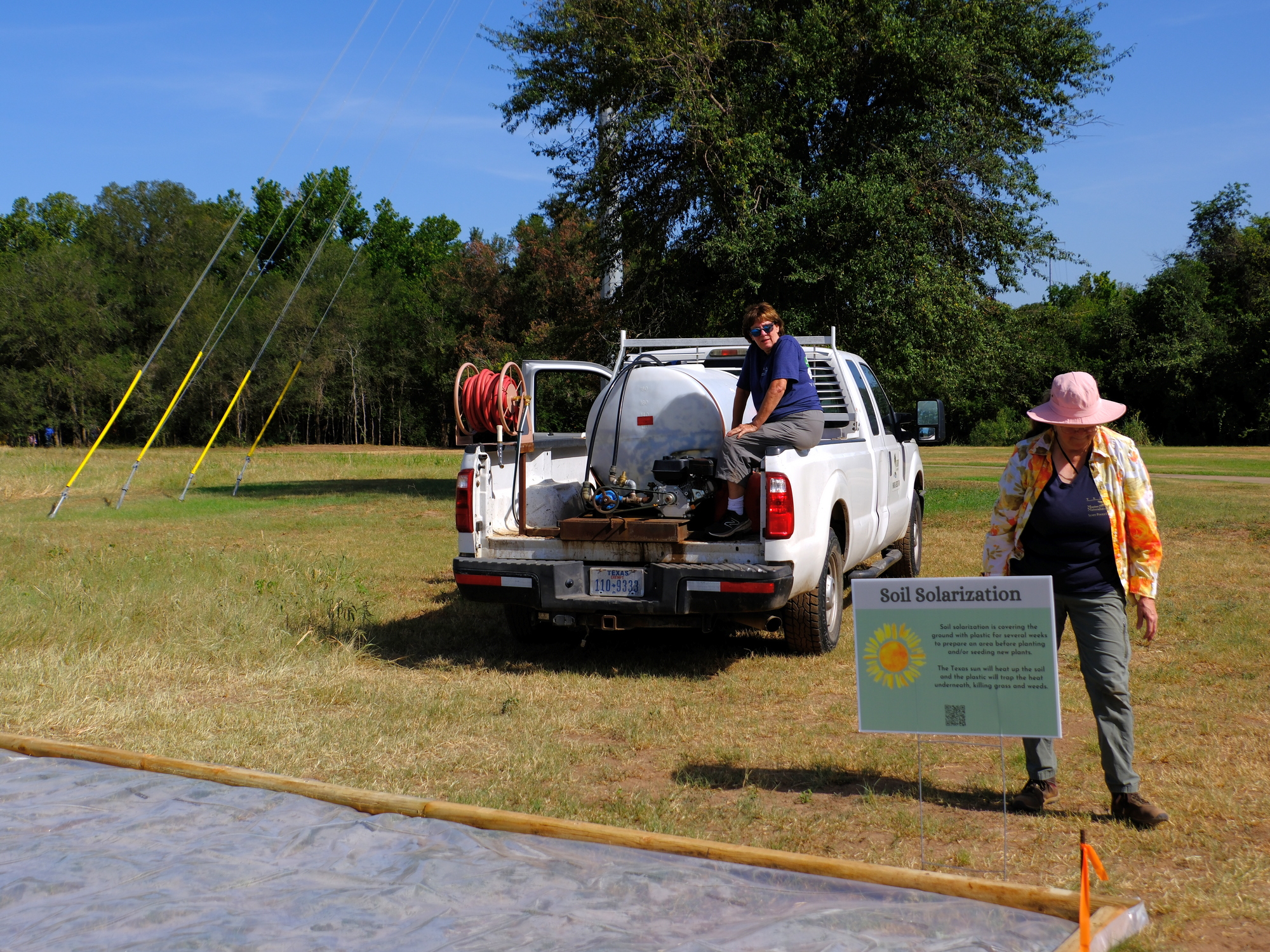
The prairie will highlight various methods of prairie restoration (including soil solarization, sheet mulching, herbicide) to offer practical examples of techniques that can restore or enhance native landscapes.
July 2025
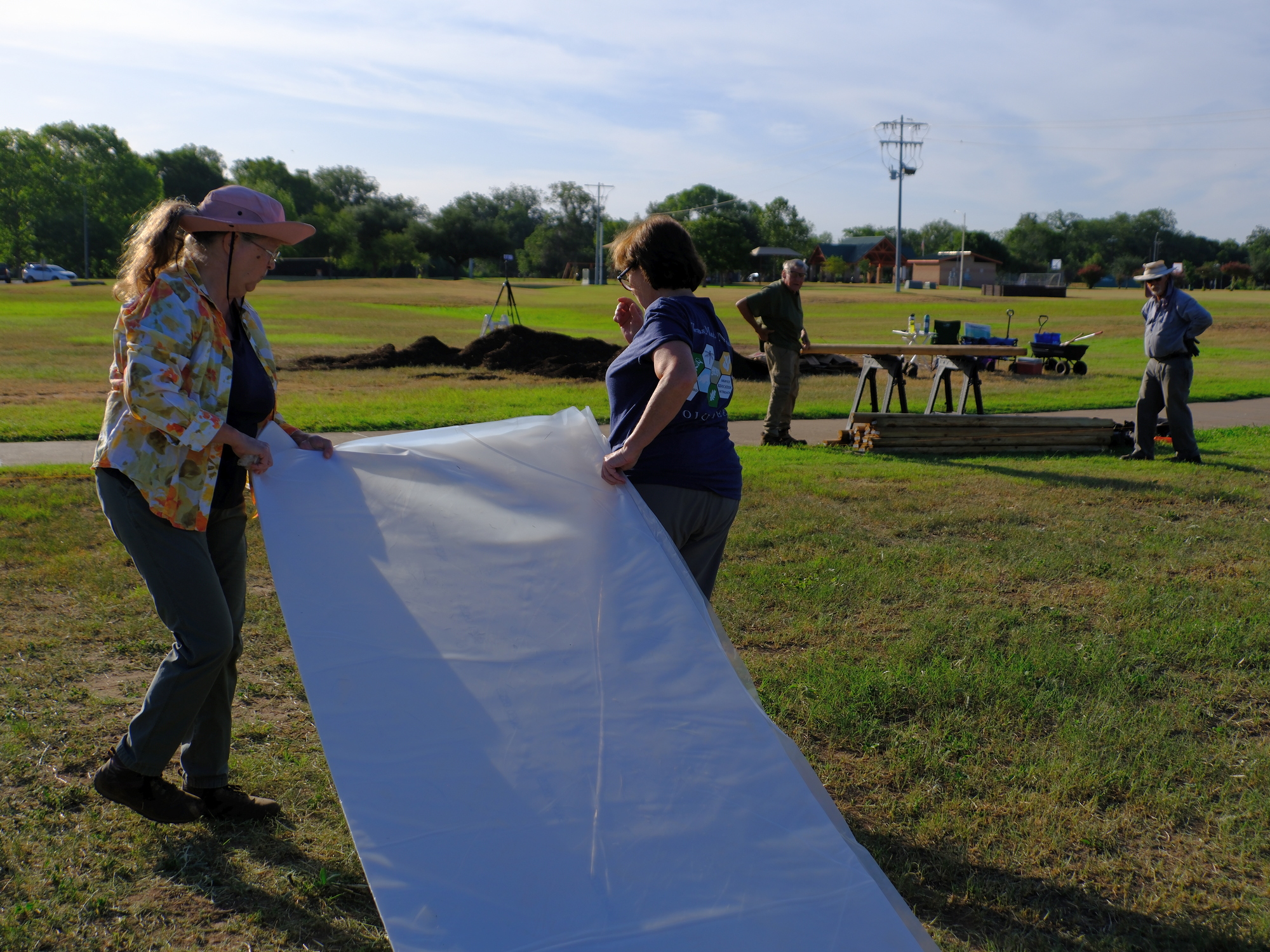
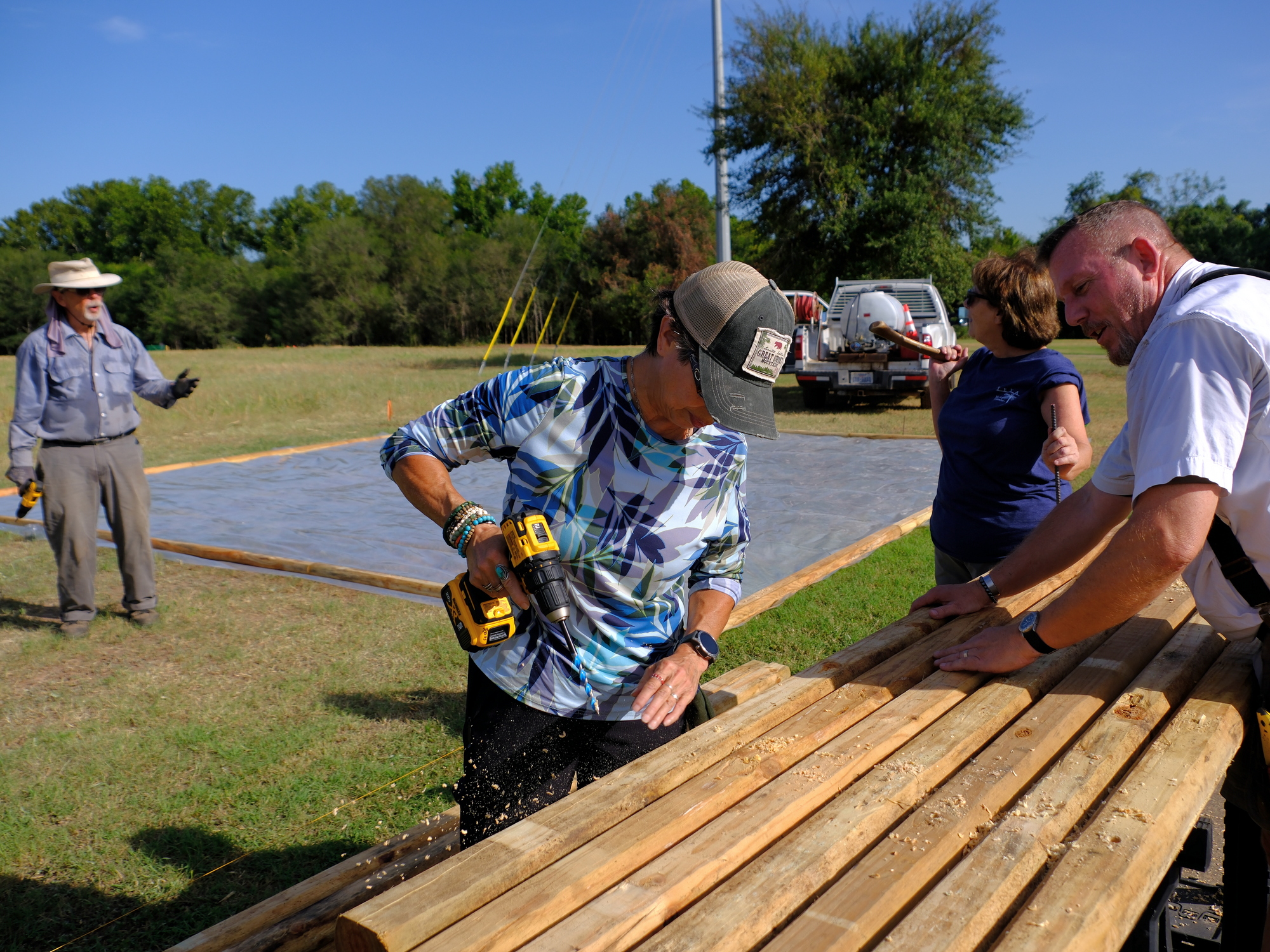
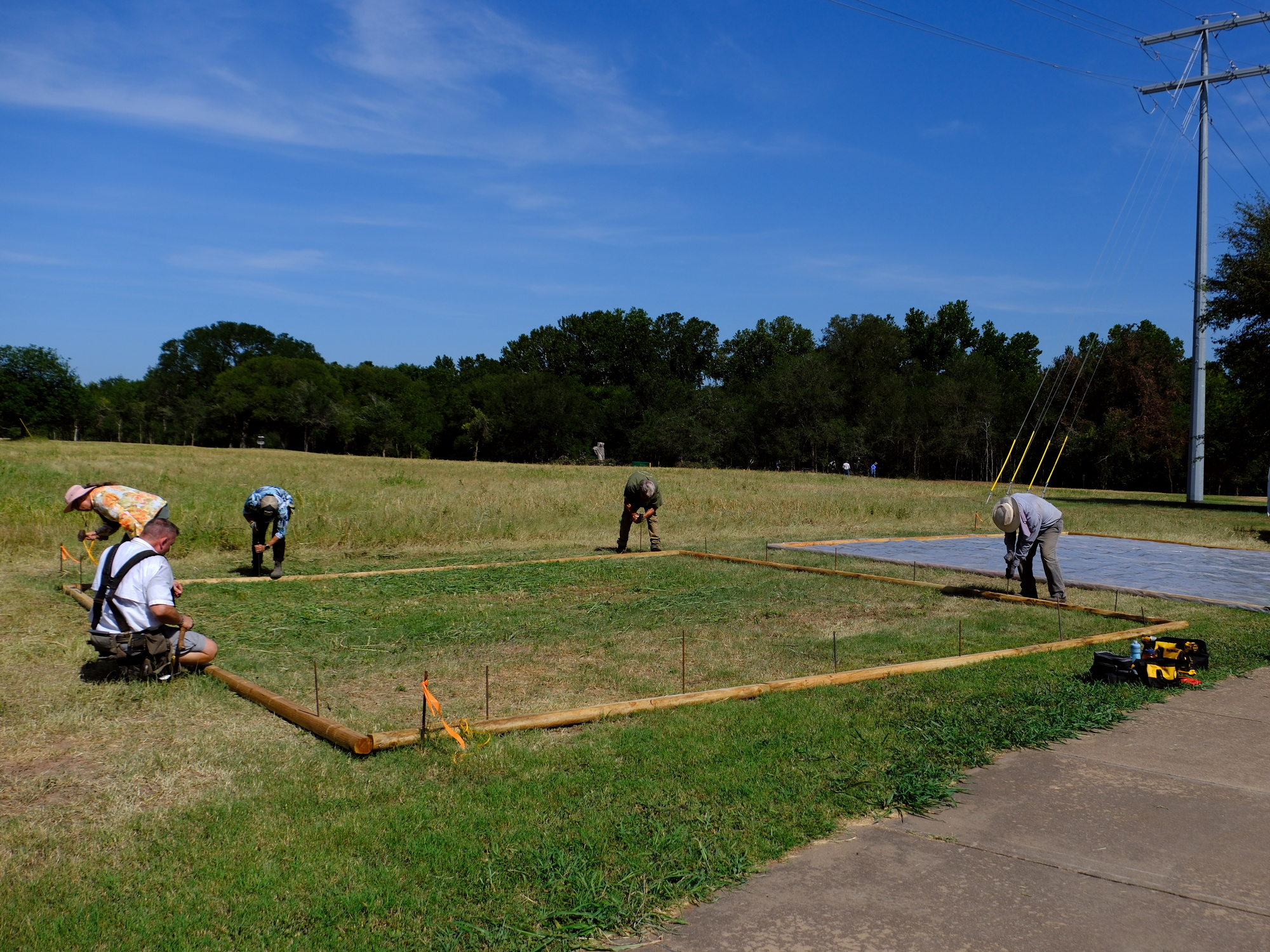
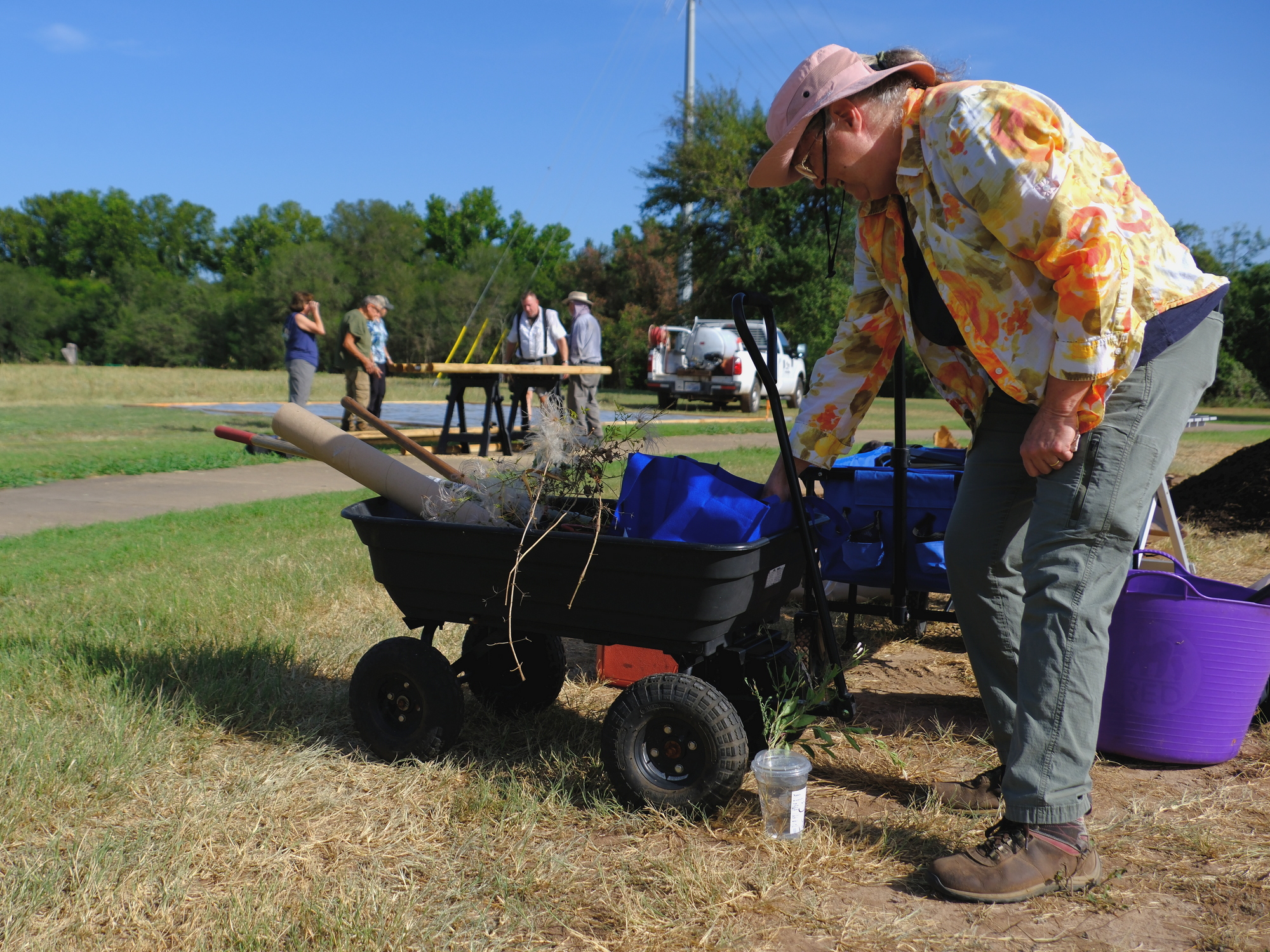
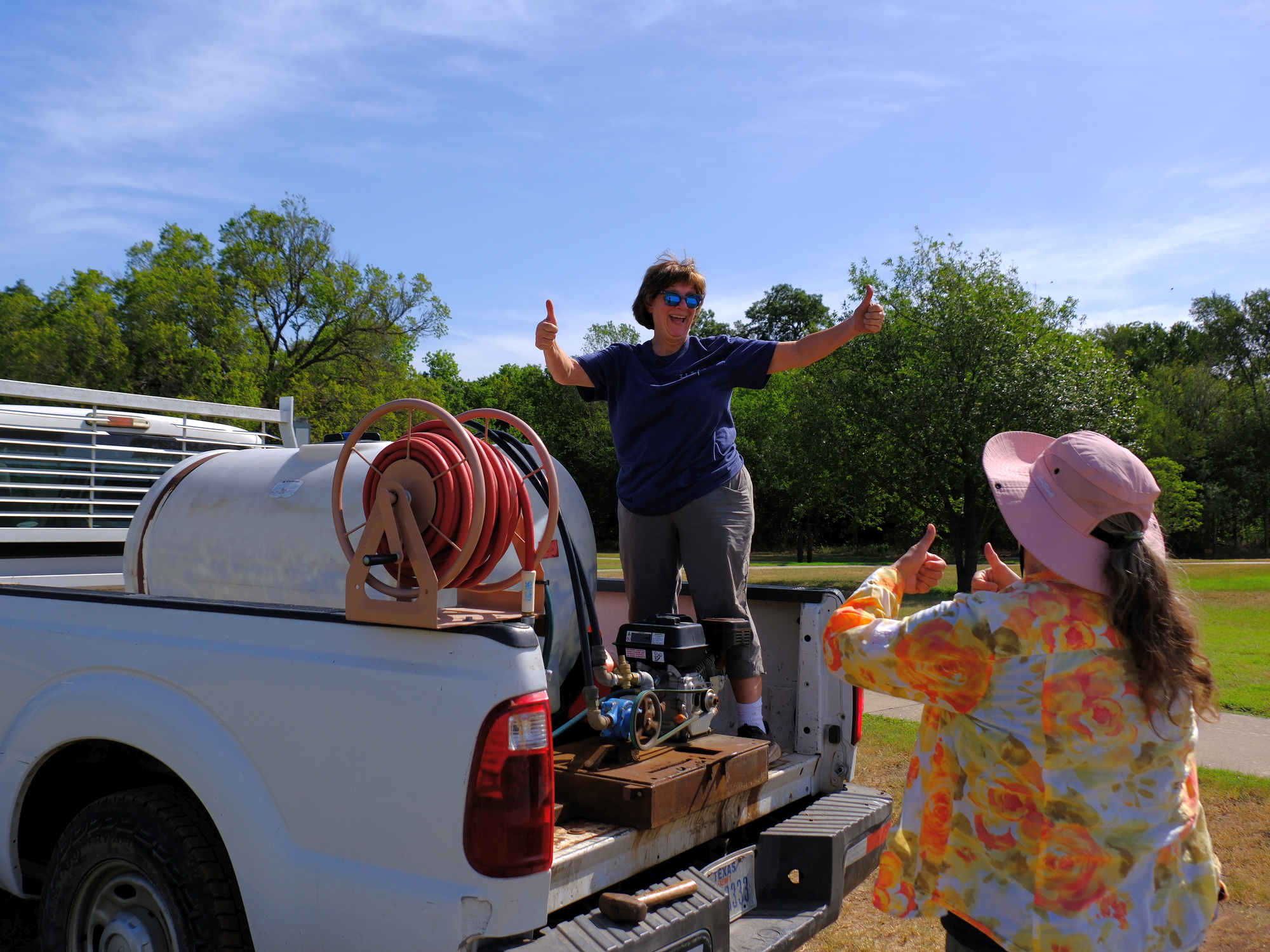
The prairie site was mowed, sprayed, and work began to build the demonstration plots to compare soil solarization and “lasagna” sheet mulching. Thanks to our Bridge Maniacs and Habitat Focus team for working hard in the heat — now it’s time for that Texas sun to work on killing Bermuda grass!
May 2025
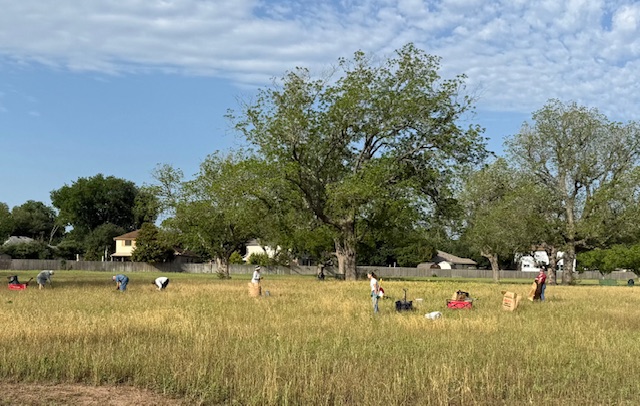
Volunteers met after rain softened the ground to hand pull invasive species out by the roots. We targeted Johnsongrass (Sorghum halepense) and Bastard cabbage (Rapistrum rugosum), two of the most aggressive offenders that can outcompete the pollinators’ preferred native plants and threaten our local ecosystem.
April 2025
With spring in full bloom, and since part of the site prep work will include treating with herbicide to remove Bermuda grass and other nonnative species, we held a Plant Rescue Party! Both Lost Pines Texas Master Naturalists and Bastrop County Master Gardeners were on hand to help with plant identification and information. Our “plant adopters” rescued the following species, some of which can be transplanted back to the prairie next year.
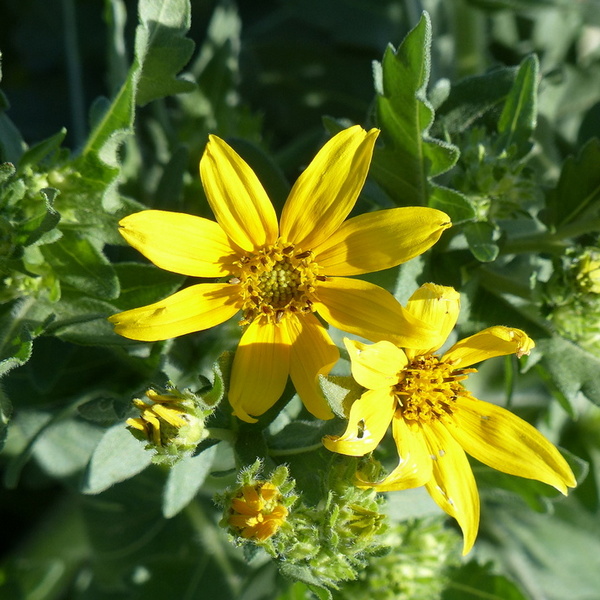
(Engelmannia peristenia)

(Callirhoe involucrata)
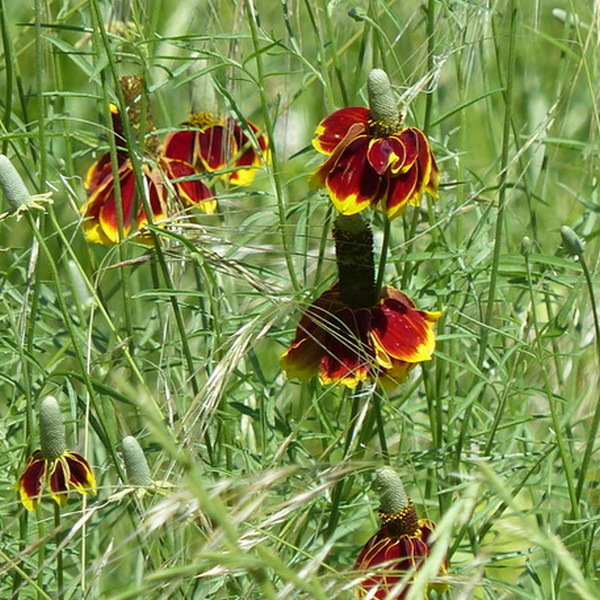
(Ratibida columnifera)

(Castilleja indivisa)
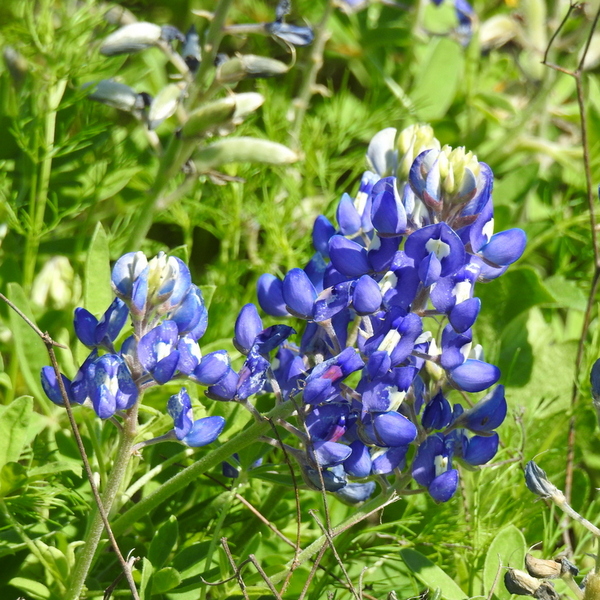
(Lupinus texensis)

(Pediomelum rhombifolium)
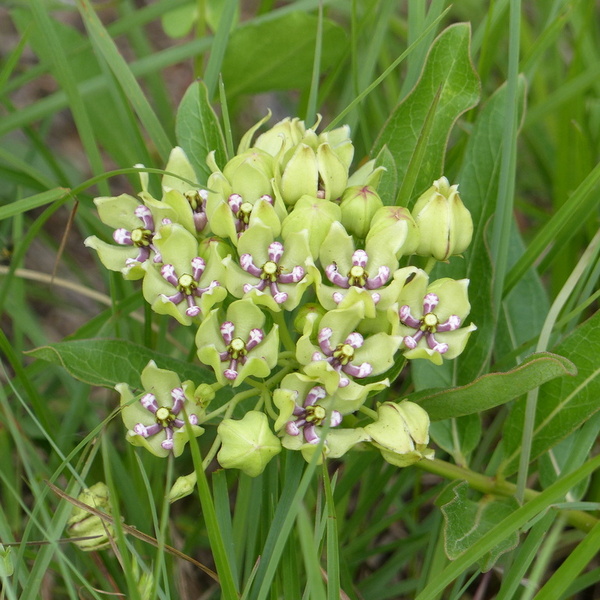
(Asclepias viridis)

(Gaillardia pulchella)
March 2025
The Texas Master Naturalist Lost Pines Chapter is proud to announce that we have been awarded a grant from Pollinators for Texas, sponsored by H-E-B Our Texas Our Future, with the goal of making large scale impacts for pollinator habitats.
photos by Megan Lowery