

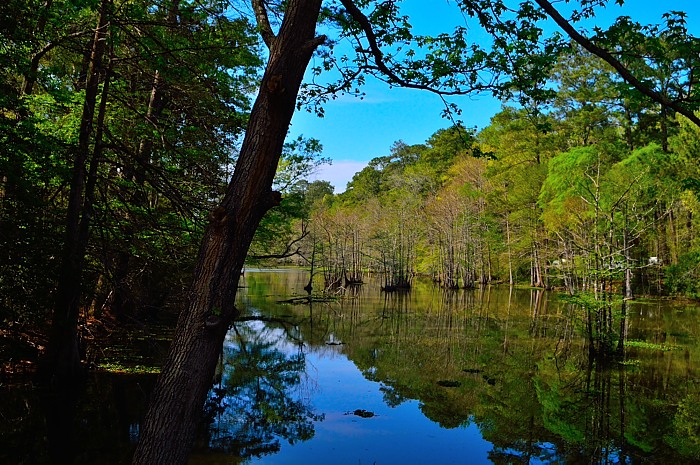
There is Texas timberland—tall, dark and imposing—which evokes visions of the gothic fairytale forests of feudal Europe. Romantics might look around fully expecting a medieval knight astride his charger to come crashing out of the tree line. Situated between the Angelina National Forest to the north and the Big Thicket National Preserve to the south, Martin Dies, Jr. State Park is right out of your favorite storybook. It sits where the Angelina and Neches rivers come together and provides one of the most diverse wildlife habitats in Texas. The mixed hardwood/pine forest has more species of trees than I have room to list. It offers a strange, savage scent. Adding to the eerie mystique of inland swamps, ancient Bald Cypress solemnly cloak a labyrinth of sloughs and backwaters—inhabited by a thriving population of alligators. The kind of place gangsters in the movies always drive the guy they’re going to kill!
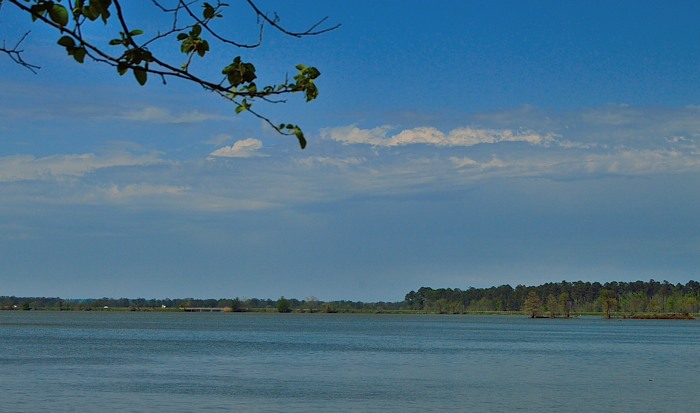
You’re not going to stumble onto this place; you have to intend to come here. Nestled next to B.A. Steinhagen Reservoir between Woodville and Jasper, the park is a full 1 ½ hour drive east from Houston. Not far from the Louisiana border, this is true East Texas—4 ½ hours further, and you’re in New Orleans! With 1,300 acres to play on, there’s more water around you than land. The park itself is situated around the banks of the 10,687-acre B.A. Steinhagen Reservoir. There are some 300 other lakes in the area; two of the closest are the Sam Rayburn and Toledo Bend reservoirs. Within the park there are four separate activity areas: Hen House Ridge, Walnut Ridge, Wolf Creek, and Rush Creek.
As you might imagine, fun on the water is a major reason people come here. You can fish from the bank, off one of the several lighted fishing piers or drop a line right from your campsite. The common fish species include catfish, crappie, bass, and perch. Boats are equally at home here as people. In fact, there are nearly 14 miles of marked paddling trails which traverse backwater sloughs along Spring Creek, the wide open lake, or the fast-moving Neches River. There are multiple launch ramps for boats, canoes, or kayaks. Even the campsites have extra parking space designed for boats and trailers. Bring your own or treat yourself to a leisurely float by signing up for guided paddling trips. . . just remember that space is limited and reservations are required. You can find all the particulars on the park website under “Events.”
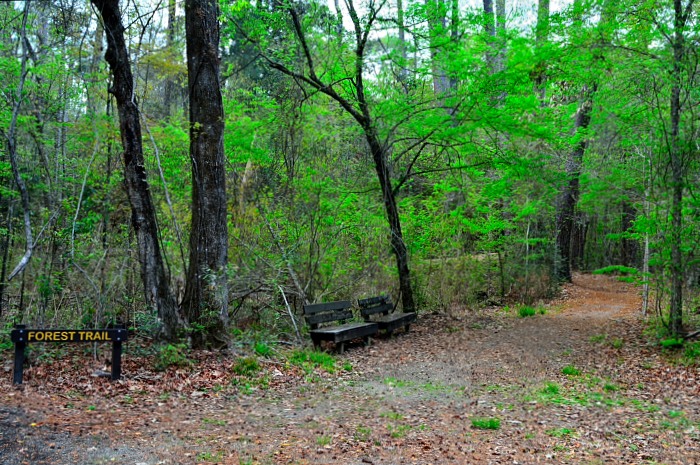
For the swimmers in your group, Henhouse Ridge offers access to the park’s only swimming area. Its open sunup to sundown, but without lifeguards. Hiking is available, but it is not the featured activity, as they only have seven miles of combined hiking or biking trails. If you crave more extensive treks, consider the endless web of nearby national forest trails outside the park.
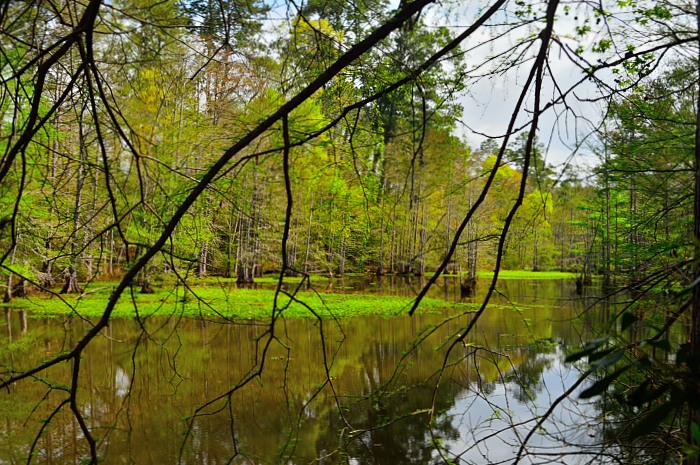
Another fun activity here is photography. As mentioned, the forest is immense and all consuming. Four species of oak dot the landscape while sweet gum and maples come to the fore in fall, providing a resplendent display of color against a backdrop of evergreens. Especially dramatic are the southern magnolia trees. They perfume the woods with their puffy white blooms and set off the forest like a string of scattered firecrackers. To enjoy a scenic drove through this special landscape, don’t forget you are sandwiched between two of the most photogenic national forests on both sides of the park. At night, the park’s seclusion from large cities cloaks you in the darkest of dark skies, swallowed by the night. Look up and find the sky aglitter with a million pinpoints of light. You can gaze at the stars by yourself or sign up for thought-provoking star parties put on by park staff.
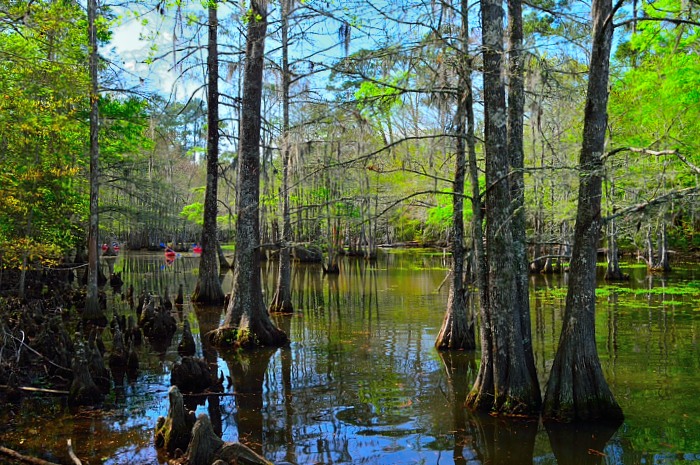
Like most other state parks, the standard package of Texas forest critters call this place home: deer, armadillos, raccoons, opossums, red & gray foxes, bobcats, etc. But alligators lurk in water as dark as shoe polish in the tin. Be careful with pets and don’t wade through the sloughs or slosh around the banks at dusk (or any other time for that matter). Stay on the trails and you’re bound to run into a variety of other wildlife. In addition to the alligators, there are a few other inhabitants you may not be used to. For example, the park has 3 different species of squirrel and 14 different species of bats at night. There’s a veritable bouquet of skinks, lizards, turtles and frogs that live in or near the water. All five poisonous species of snakes live here, as well as a wider cohort of non-poisonous ones, so it pays to know which is which. The large surface area of water draws many different waterfowl. Up in the skies, if you’re lucky, you can glimpse American swallow-tailed kites or even bald eagles (in the summer).
This fertile forestland has been a magnet for humans since the original Caddoans were displaced by the white man in the early 1800s. The waterways always provided food but trees and shrubs offered up plentiful fruit and nuts. Soon steamboats were navigating up and down the waterways between East Texas, Galveston and New Orleans. In 1882 the first railroad came to Tyler county and promptly put the steamboats out of business. The timber industry was king here after the Civil War and claimed almost all of the original old growth forests, putting Texas on the map as third among the lumber-producing states. A commercial ferry across the Neches River proved unreliable when water levels rose. The new Neches bridge opened up travel in 1943 connecting the future Martin Dies, Jr. State Park to U.S. Highway 190. That put the wonderland on the map. The park began development alongside the Steinhagen Reservoir in the 1960’s. With support from then state senator Martin Dies, Jr., TPWD leased the park’s land from the U.S. Army Corps of Engineers in 1964. In honor of the senator’s influence, the park was named after him one year later.
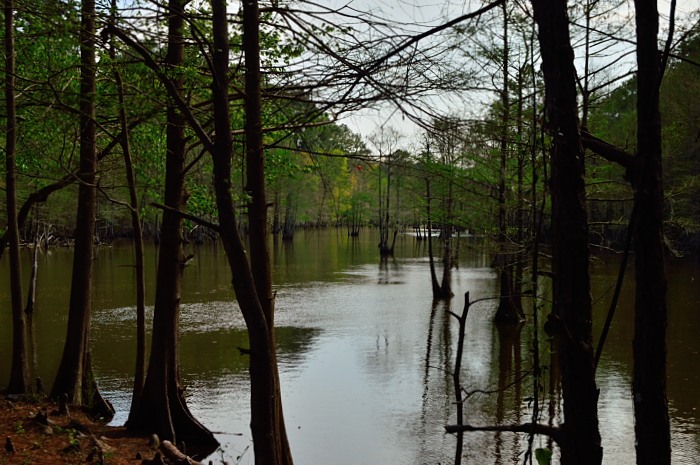
This is dense terrain. A quick look around and it’s obvious you are deep, deep in the forest. But don’t let the isolation stop you. Woodville (Dogwood Capital of Texas) and Jasper (Jewel of the Forest) are close enough to keep you supplied with fuel, groceries, eateries and limited shopping. Here’s a tip from personal experience: Jasper holds an annual Azalea Festival on the third Saturday in March. It’s VERY popular. Parking is all but impossible anywhere within many blocks of the event unless you get there extra early (festival hours are 10:00 – 4:00).
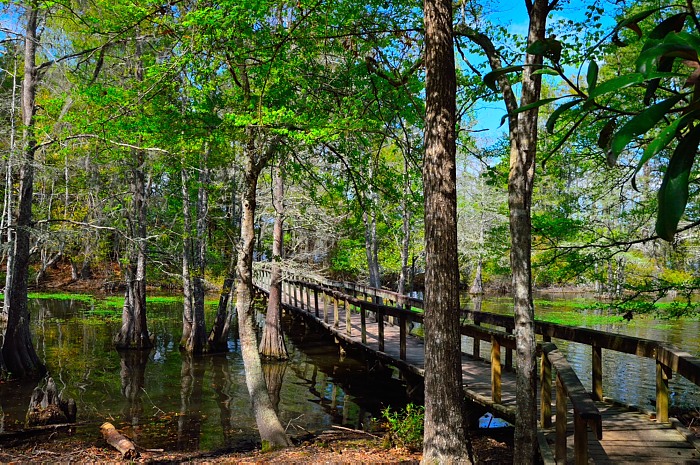
Speaking of tips, put a flag down by this one: I visited in March and immediately noticed a fellow camper wearing a beekeeper’s hat—you know, one of those hats covered by 360 degrees of netting? It didn’t take me long to figure out that this was not that camper’s first rodeo. The park was overrun by a persistent, unrelenting glory of winged insects, most of which were hungry and aggressive mosquitoes. They were floating around like spores in spring! Something told me, these guys were not temporary, but full-time seasonal residents. This is swamp country!
Go into town and stock up on mosquito repellent, but whatever you do don’t pass this park up just because of bugs. This is about as close as you’ll ever come in Texas to a rainforest, with all the mystery and intrigue that implies. The waters are not without dangers, the thick undergrowth is everywhere, and the majesty of the trees is sure to fill your heart with respect and awe. Alone with your thoughts, the best time of day is early morning dawn. All are asleep (including the bugs) in a forest so silent you can hear your own heartbeat. Watch as the brilliant star-spangled sky slowly fades red and a nimbus of light, a blue corona, forms a halo at the corners of your view. Just beyond, when the light turns that luminous gold I wish I could bottle and keep, the early morning sun sparkles the lake. Solitude and the magnificence of nature rules, and you’re there to give witness.
By Larry Gfeller