

Free from Hill Country Master Naturalists and the Native Plant Society of Texas
Help for your pollinator garden, from people who live here too.
Pollinator Garden Assistance and Recognition Program (PGARP)
Our mission is to encourage, educate, assist, and recognize individuals, businesses, and organizations who plant and maintain native Texas Hill Country pollinator gardens.
I want help with my garden
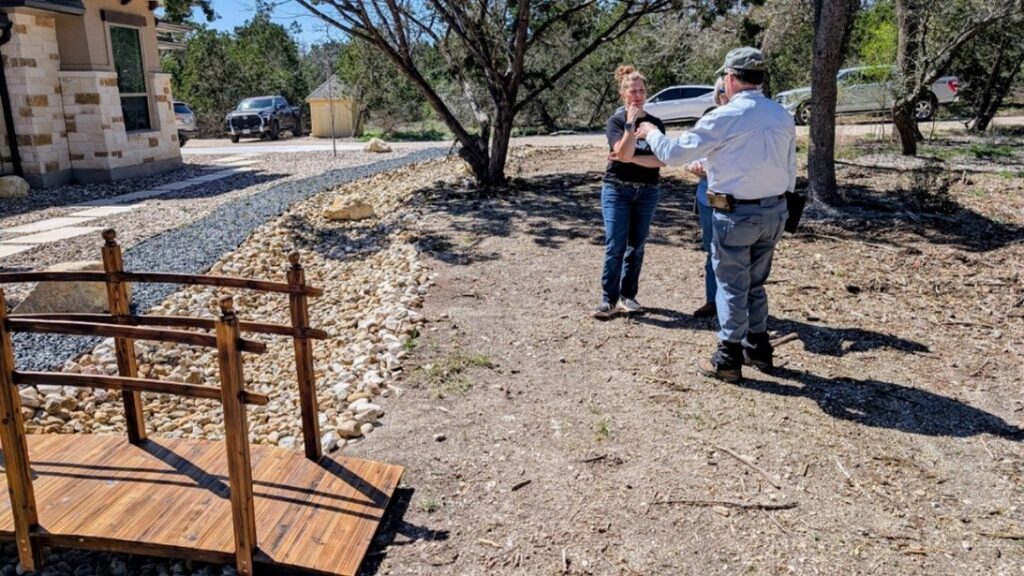
Free garden consultation
Starting from scratch, or adding to what you have? A volunteer team visits, listens to your goals, and suggests native plants suited to your site.
If you feel a little overwhelmed, we’ll help you find your best first steps. Recognition is never required for our help.
My garden is established
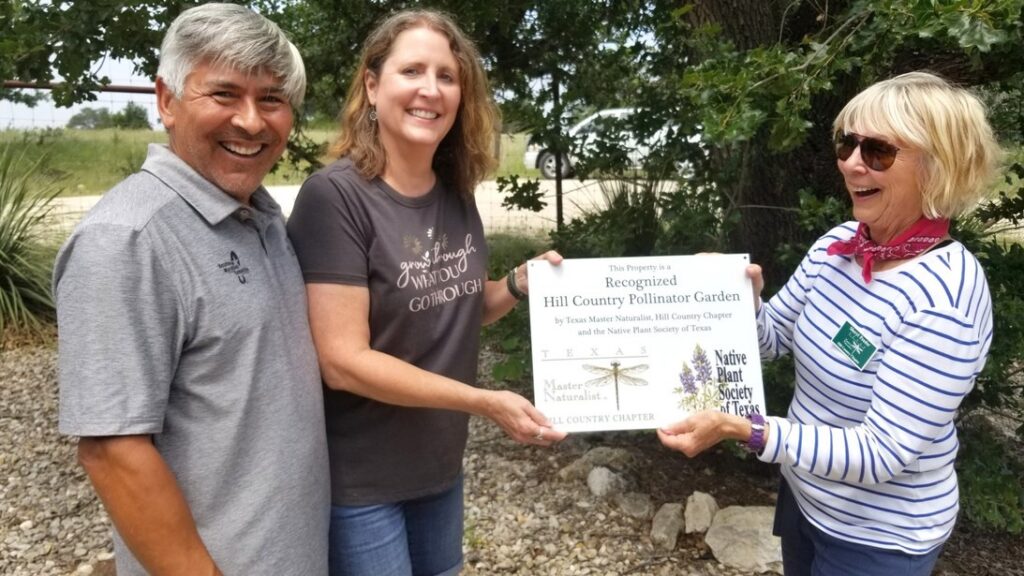
Pollinator Champion recognition
Has your garden matured into real pollinator habitat? Apply to have it recognized. Champions receive a certificate presented at a Hill Country Chapter or Native Plant Society meeting. [Add sign details if applicable]
How it works
We come as invited guests. You know your land best; we bring native-plant experience and ideas for you to consider.
1. Send a request
Fill out a short online form telling us about your garden and your goals.
2. We contact you
A volunteer from your area’s team reaches out to set a visit time that works for you.
3. We walk your garden
Together we look at sun, soil, and space, and talk through plants that will do well on your site.
4. You get a written report
A summary of the visit with suggestions and native plant ideas you can use at your own pace.
Why pollinator gardens matter
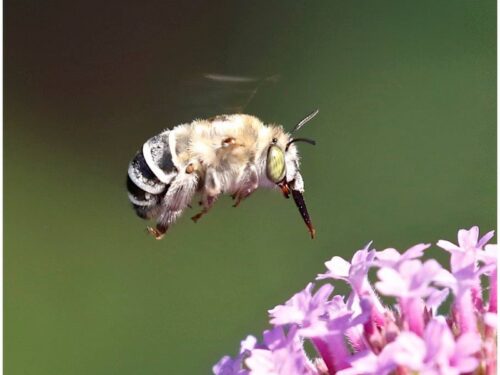
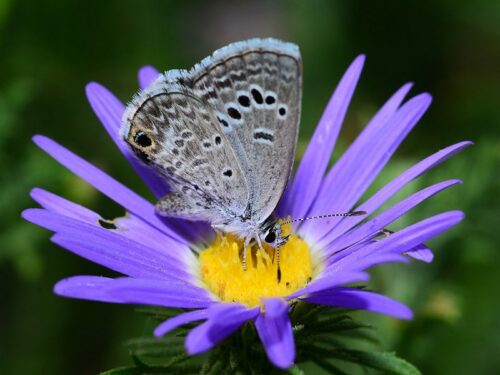
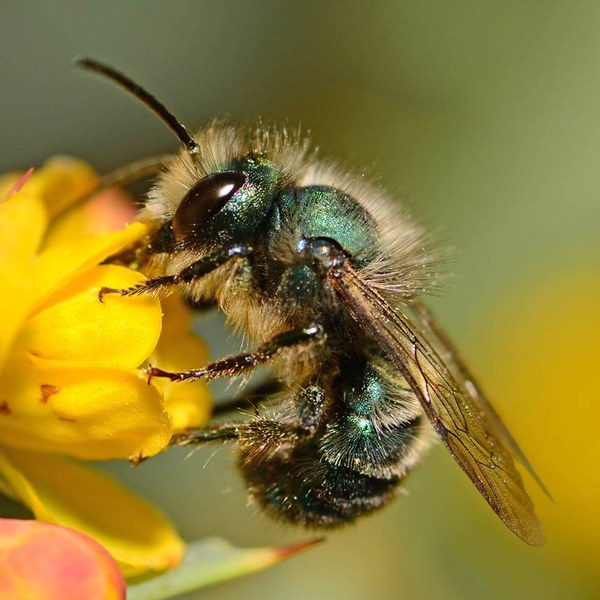
Bees, butterflies, moths, flies, beetles, bats, and hummingbirds pollinate the plants that give us food and give the Hill Country its beauty. Loss of habitat and overuse of pesticides are shrinking the native nectar plants they depend on.
Every garden planted with natives puts some of that habitat back. You don’t need acres. A chain of small gardens across our towns and ranches gives pollinators food and shelter from one stop to the next.
“It’s easy to plant a pollinator garden anywhere – at home, school, business, or church – and it doesn’t have to be a large garden.”
Pam Lienhard, Texas Master Naturalist, Hill Country Chapter
What makes a Pollinator Champion garden
Pollinators need a mix of native flowers blooming across many seasons, host plants where their young can feed, and places to nest and shelter. Our program also aims to replace lost habitat. A Champion garden meets these six minimum requirements, which our volunteer team reviews with you during a visit.
Requirement 1
At least 100 square feet
A planted or developed garden area of 100 square feet or more, about the size of a 10-by-10-foot bed.
Requirement 2
Nine months of blooms
Something in flower for at least nine months of the year, so pollinators find food across the seasons.
Requirement 3
Little or no pesticide
Limited or no use of pesticides, herbicides, or insecticides in or near the garden.
Requirement 4
At least 75% native plants
A diverse mix of plants, at least three-quarters of them native to Central Texas: the Edwards Plateau, Blackland Prairie, and Trans-Pecos ecoregions.
Requirement 5
A water source
A birdbath, fountain, pollinator puddle, or small stream.
Requirement 6
Four or more habitat features
A Champion garden feeds adult pollinators and also gives them places to rest, reproduce, nest, shelter, and overwinter. Include at least four of these in or near your garden.
- Low-hanging limbs for resting
- Snags (standing dead or dying trees)
- Bare ground for ground-nesting native bees
- Un-mown areas for overwintering
- Dry plant stems for overwintering
- A native bee house
- Crevices in walls
- A brush pile
- A rock pile
- Stacked logs

Recommended, not required
Good practices for any garden
- Call 811 before you dig to locate underground utilities.
- Protect plants from deer as needed.
- Add wire fencing to keep out small animals.
- Check your planting plans with your homeowners association, if you have one.
- Follow Firewise precautions (see texaswildfirerisk.com).
- Share your pollinator garden with friends and neighbors.
Not there yet? A free consultation can help you get there.
Requirements revised September 2026.
Where we visit
The program serves the Hill Country Chapter’s ten counties: Bandera, Edwards, Gillespie, Kendall, Kerr, Kimble, Mason, Menard, Real, and San Saba.
Visits depend on where we have volunteers. Our teams are based in Boerne, Fredericksburg, and Kerrville, so we may not be able to reach every part of every county. When you send a request, we’ll let you know whether a team can visit.
Outside these counties? Contact us anyway. We’ll try to connect you with a Master Naturalist chapter near you.
Love native plants and live in the area? Become a Texas Master Naturalist and help us reach more gardens.

Gold dots mark volunteer team bases.
Plan your garden
Plants and pollinators list
Native perennials that bloom through the year and support Hill Country pollinators.
Native plant nurseries
Area nurseries that carry native plants and seeds, plus seasonal plant sales.
Books and websites
[Add your recommended reading list link]
Common questions
Does it cost anything?
No. Consultations and recognition are free, provided by trained volunteers.
Do I have to want recognition to get help?
Not at all. Many people simply want advice. Becoming a Pollinator Champion is optional.
Is the visit an inspection?
No. We come as invited guests to listen and offer suggestions. What you do with them is entirely up to you.
How big does my garden need to be?
Any size is welcome for a consultation. For Pollinator Champion recognition, the garden needs to be at least 100 square feet.
Where do you visit?
We serve Bandera, Edwards, Gillespie, Kendall, Kerr, Kimble, Mason, Menard, Real, and San Saba counties, wherever we have volunteers available. Outside that area, contact us and we’ll try to point you to a chapter nearby.
Where can I find native plants?
Start with our plants and pollinators list and our native nursery list.
Ready to get started?
We love to talk pollinators and native plants. Questions first? Email us at [email protected].