


Discovering Trinity Bay
A living estuary shaped by water, wildlife, people, and change.
There are places that quietly shape the world around them. Trinity Bay is one of those places.
The story begins
Discovering Trinity Bay
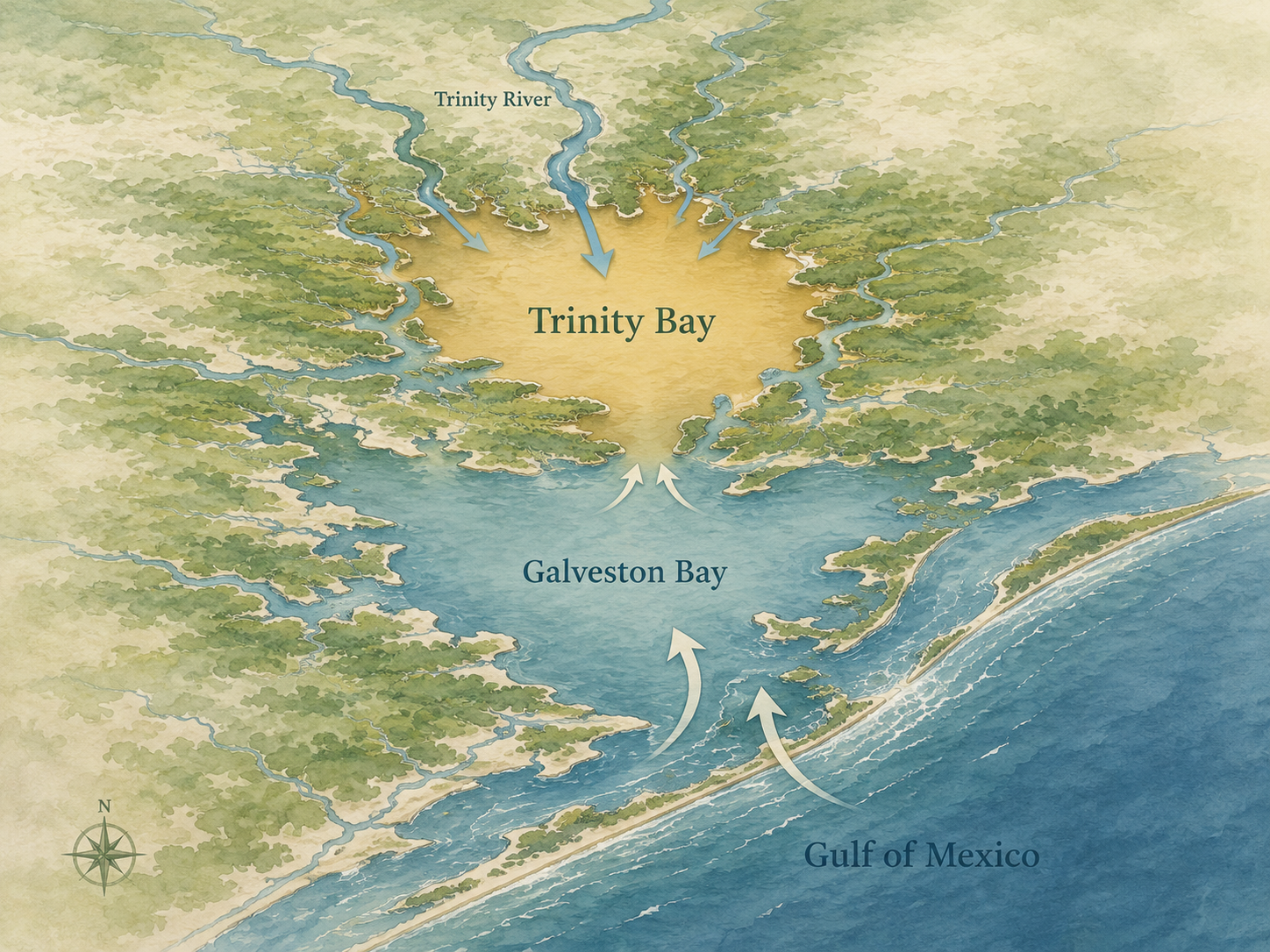
Stretching along the upper Texas coast, the bay is where fresh water from the Trinity River meets the salty waters of Galveston Bay and the Gulf of Mexico.
It may seem like a simple meeting of river and sea, but it creates one of the richest and most productive ecosystems in Texas.
Every drop of freshwater that reaches the bay carries nutrients from forests, farms, cities, and prairies hundreds of miles upstream. When that freshwater mixes with the tides, it creates an ever-changing environment where fish spawn, oysters grow, marshes flourish, and migratory birds find food and shelter.
To understand Trinity Bay is to understand how everything is connected.
This is the story of a living estuary—its wildlife, its people, its challenges, and the hope that comes from restoring one of Texas’ greatest natural treasures.

An estuary in motion
Where Freshwater Meets the Sea
At first glance, Trinity Bay looks peaceful.
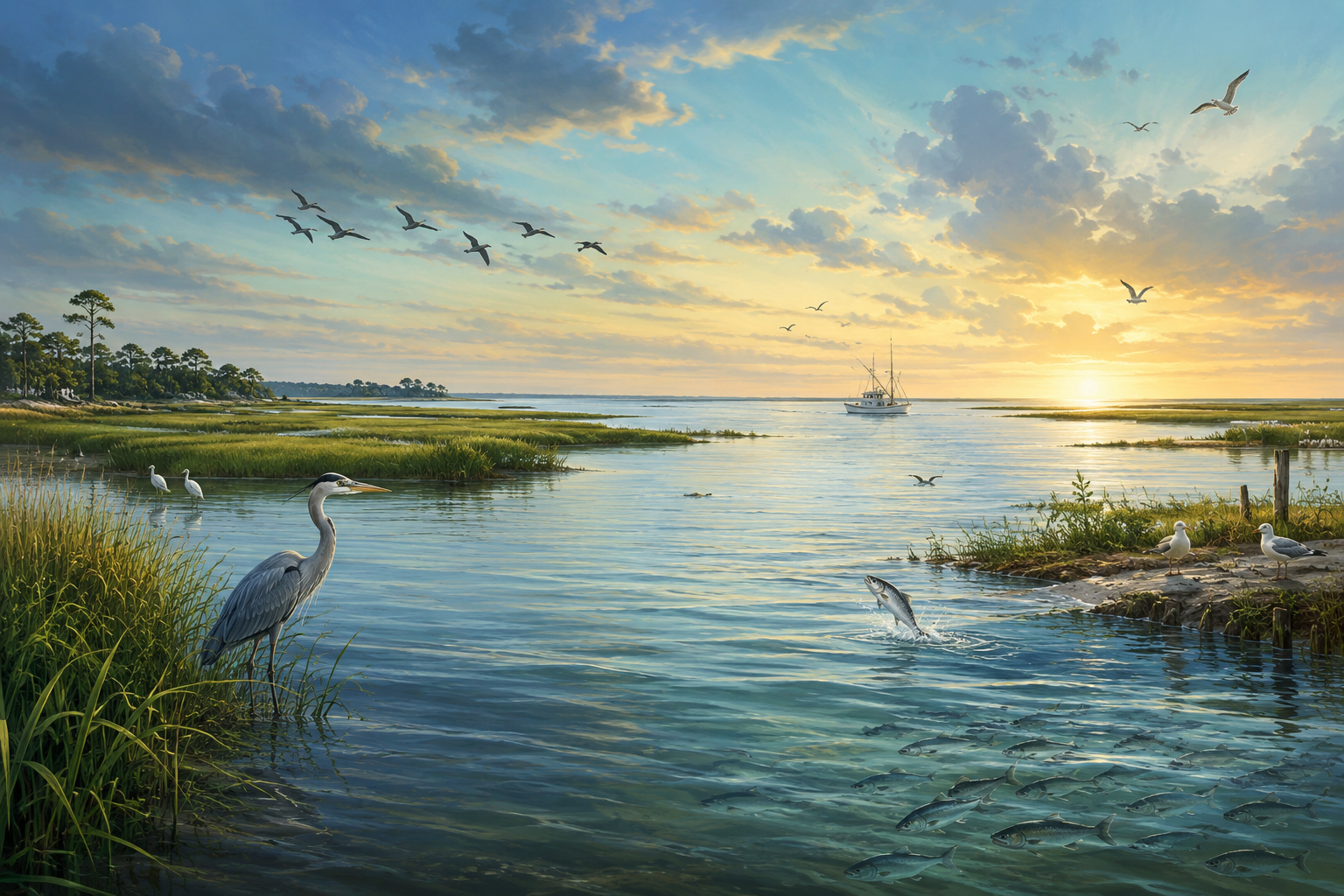
The water stretches toward the horizon while marsh grasses sway with the breeze. Pelicans drift overhead, and fishing boats leave quiet wakes behind them.
Beneath that calm surface, however, the bay is constantly changing.
Freshwater flows south through the Trinity River while tides push saltwater inland from Galveston Bay. The balance between the two changes every day with rainfall, river flow, wind, and the tides.
That balance determines almost everything that happens here.
Too much freshwater, and some marine species struggle. Too much saltwater, and wetlands begin to change. Somewhere between those extremes lies the delicate mix that supports one of the most diverse estuaries on the Gulf Coast.
Everything is connected
A Living Web
Nothing in Trinity Bay exists by itself.
Tiny microscopic plankton become food for shrimp and small fish. Those fish feed red drum, spotted seatrout, and flounder. Wading birds patrol the shallows while dolphins hunt in deeper channels.
Even the marsh grasses and oyster reefs play essential roles, providing shelter, cleaning the water, and protecting young wildlife until they’re ready for open water.
Nature isn’t organized into separate pieces.
It is woven together like a web. Strengthen one strand, and the entire system benefits. Damage one part, and the effects spread farther than we often realize.


Life in changing water
Built to Live Here
Life in an estuary isn’t easy.
Rainstorms can suddenly lower salinity. Summer heat warms shallow water. Winter cold fronts bring dramatic changes in only a few hours.
The animals that live here have adapted to these changing conditions.
Fish move between deeper and shallower water as conditions change. Oysters quietly filter gallons of water every day while building reefs that protect shorelines. Herons wait patiently for the perfect moment to strike, while pelicans dive with remarkable precision into schools of baitfish.
Each species has found its own way to thrive in a place where change is constant.
The bay’s changing rhythm
Following the Seasons
No two days in Trinity Bay are exactly alike, and no two seasons are either.
Spring awakens marshes with new growth and signals the beginning of spawning for many fish species. Summer brings warm water and abundant life as young fish, shrimp, and crabs mature in protected nursery habitats.
Autumn fills the skies with migrating birds stopping to rest and feed before continuing their journeys south. Winter offers a quieter landscape, but life never truly stops. The bay simply settles into a different rhythm until spring returns once again.
Every season adds another chapter to Trinity Bay’s story.


People are part of the story
Sharing the Bay
People have depended on Trinity Bay for generations.
Commercial fishermen, recreational anglers, birdwatchers, hunters, scientists, and families all find something valuable here. Industries and shipping have also shaped the region, bringing economic opportunity while creating new challenges for the environment.
Like many estuaries around the world, Trinity Bay faces pressures from pollution, habitat loss, shoreline erosion, and changing weather patterns.
Yet there is reason for optimism.
Across the bay, volunteers rebuild oyster reefs, restore marshes, monitor wildlife, and improve water quality. Communities are discovering that protecting nature also protects the people who live and work along the coast.
The next chapter
Looking Ahead
Conservation isn’t about returning Trinity Bay to the past.
It’s about ensuring that future generations experience the same thriving estuary we enjoy today.
Scientists continue to learn more about the bay each year. New technology helps monitor water quality and wildlife. Restoration projects are rebuilding habitats that were once thought to be lost.
Perhaps the greatest hope comes from people who simply care enough to learn.
Every visitor who asks a question, every student who explores a marsh, every volunteer who plants marsh grass, and every family that spends a day on the water becomes part of Trinity Bay’s continuing story.
The future of the bay won’t be written by any single organization or project.
It will be written by all of us.